
Xplorate Pacific Pty Ltd. has received a milestone beyond visual line of sight (BVLOS) approval from the Civil Aviation Safety Authority (CASA).
The near-three-year authorization establishes an unprecedented, continuous aerial monitoring framework over one of Australia’s most critical energy corridors.
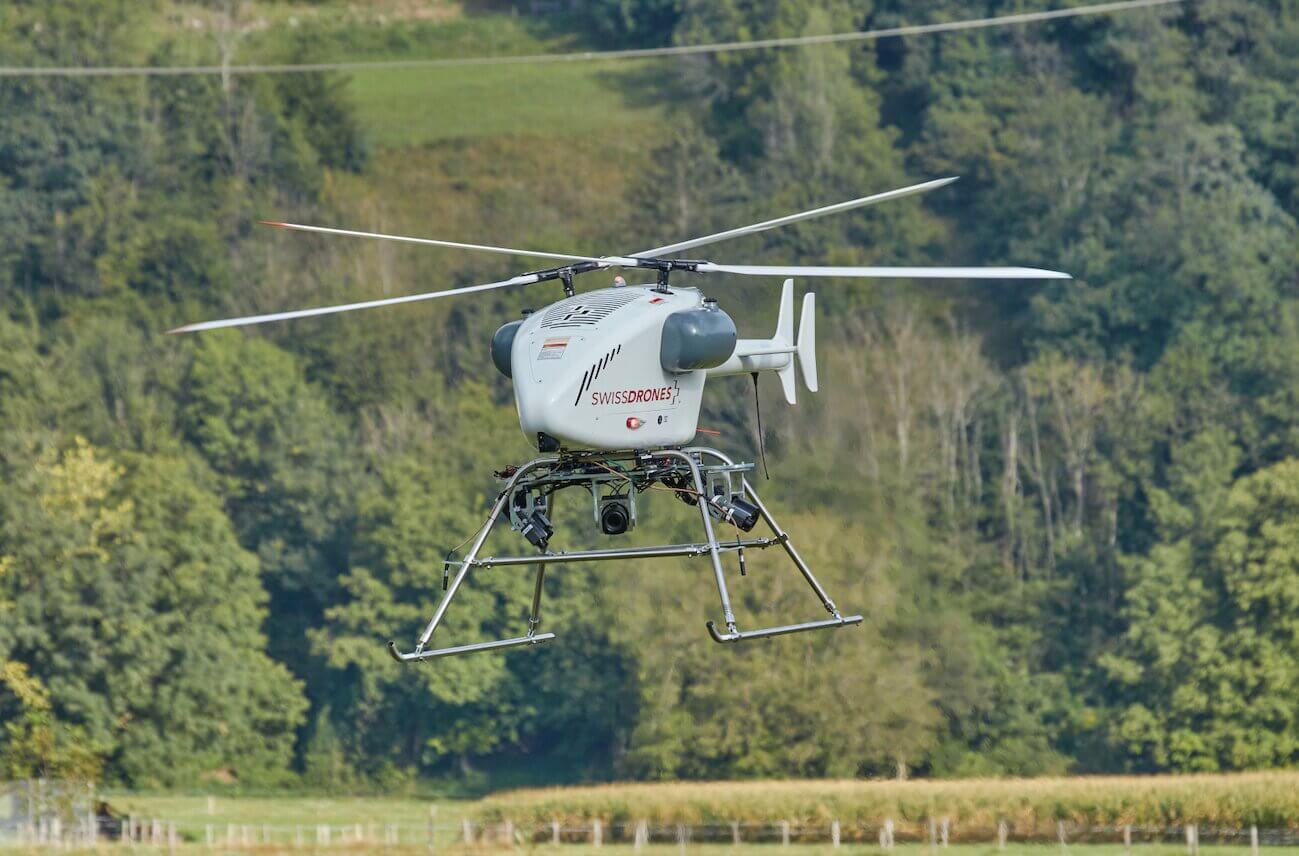
Effective immediately through March 31, 2029, the approval (CASA instrument CASA.BVLOS.0250) clears Xplorate Pacific to operate its flagship SwissDrones SDO 50 V3 unmanned helicopter around the clock.
Operations will span non-controlled airspace up to 500 feet (152.4 meters) above ground level under the company’s Remote Operator’s Certificate (CASA.ReOC.7640).
The massive authorized envelope covers an active grid roughly 560 kilometers north–south by 740 kilometers east–west, straddling the South Australia–Queensland border.
Previously constrained to localized, line-of-sight sorties, this regulatory breakthrough transforms Xplorate Pacific’s regional footprint into a permanent, infrastructure-wide data utility.
“This is a genuine turning point for industrial asset management in Australia,” said Ronnie Fahy, chief executive officer of Xplorate Pacific.
“A defensible, long-term regulatory position allows us to move away from ad-hoc operations. We are giving our clients a standing, basin-scale utility that flies heavy missions day or night, building real, compounding asset value over multiple years.”
The Cooper Basin’s vast gathering network — thousands of kilometers of flowlines, hundreds of well sites, and critical processing nodes — has historically relied on slow, expensive, and high-risk manual ground patrols or manned aviation.
By standardizing on the SwissDrones SDO 50 long-range mini helicopter platform, Xplorate Pacific replaces high-HSE-exposure methods with predictable, programmatic inspection cycles.
The newly unlocked night-flying mandate allows operators to request round-the-clock emergency response, rapid leak detection, and wildfire intelligence.
The Cooper Basin BVLOS authorization is strategically significant. It allows Xplorate to fly complex missions over vast distances – day or night across remote oilfields, gas pipelines, power transmission corridors and other critical assets.
In practical terms, energy infrastructure that was once difficult, costly or dangerous to inspect can now be monitored more efficiently, more frequently, and with far less risk.
Xplorate’s ethos of “doing the things others say cannot be done” is evident in this achievement: the company is leveraging cutting-edge uncrewed aircraft to perform tasks previously considered impossible or impractical.
By replacing manned helicopters and ground patrols with high-endurance drones, Xplorate enables its clients to increase profitability and safety – reducing downtime, labour and fuel costs while eliminating hazards to personnel.
Ronnie Fahy, CEO of Xplorate Pacific, welcomed the news: “This is a genuine turning point for industrial asset management in Australia. A defensible, long-term regulatory position allows us to move away from ad-hoc operations. We are giving our clients a standing, basin-scale utility that flies heavy missions day or night, building real, compounding asset value over multiple years .”
With the new approval, Xplorate’s BVLOS services will immediately benefit high-impact industries. Oil-and-gas producers, power utilities, and even emergency management agencies in the Cooper Basin can now leverage Xplorate’s long-range drone fleet to inspect pipelines, well sites, transmission lines and remote facilities 24/7.
These missions can be carried out on-demand without the expense of mobilizing manned aircraft or ground teams, significantly reducing operational costs and risk.
The Cooper Basin mission area includes both sparsely populated outback and regulated airspace, proving that large-scale RPAS) operations can be performed safely alongside traditional aviation.
This press release was prepared and distributed by Xplorate.