
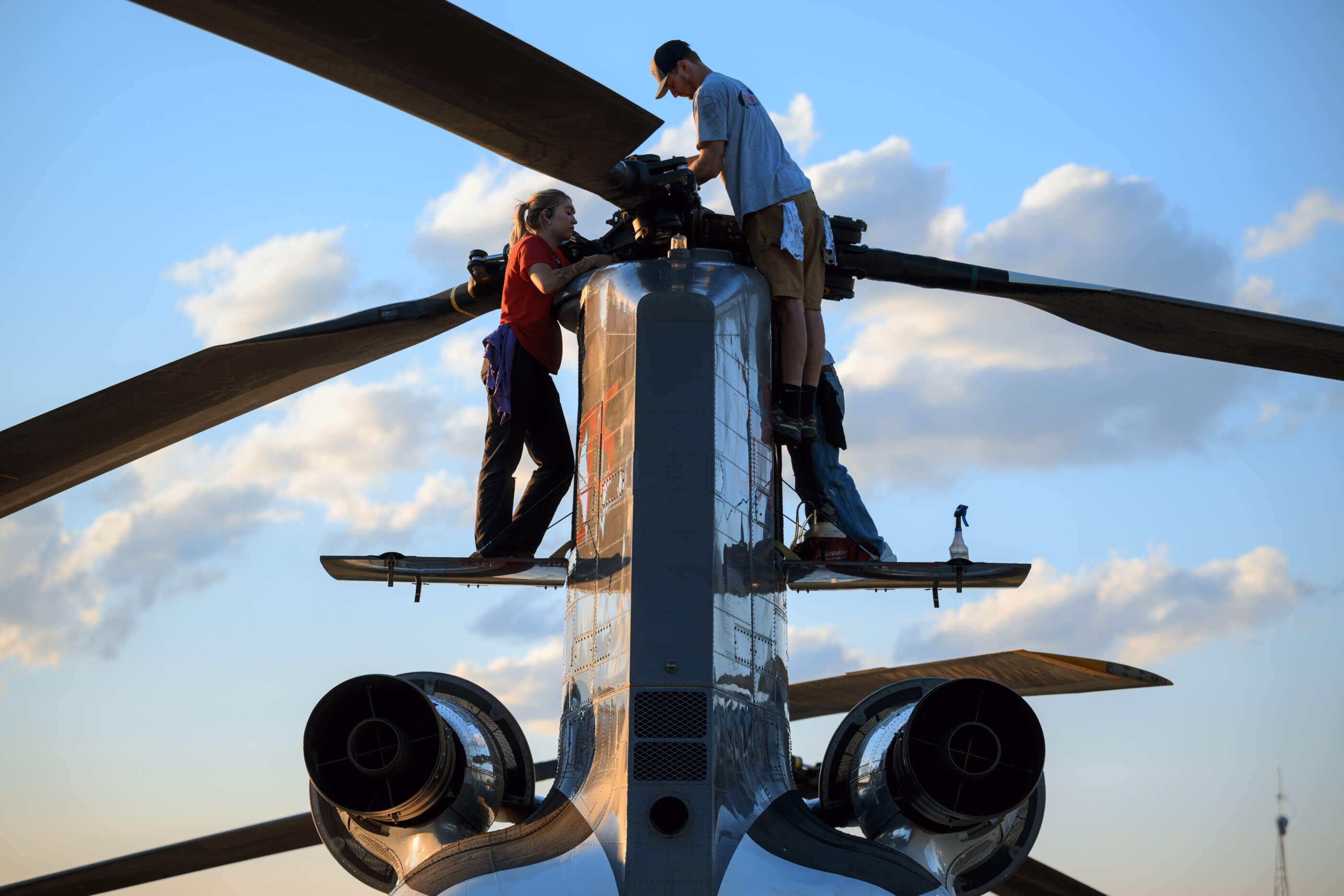
Back in 1980, we were keeping Bell 206s, the early AStars, and medium helicopters flying with nothing but a toolbox, a manual, our own wits, and maybe an HF radio to talk to base. We didn’t have satellite phones, real-time digital tracking, or computers diagnosing engine faults. If an AStar had a startup issue in the middle of nowhere, it was entirely on our shoulders to figure it out and fix it so the crew could get home.
The industry might pay a lot more today, but the modern era is buried in iPads, digital logs, and strict corporate protocols. They simply don’t make characters — or engineers — like the ones who kept the camps running back then.
I entered the aviation industry in 1979–80, when most technical school graduates were hoping to find a job after graduation — and had been told that the classes before us had worked for free!
To me, that wasn’t the worst-case scenario (although making more money than I did working in a service station seemed amazing). The job market for apprentice aircraft maintenance engineers (AMEs) had turned around significantly, and the difficult choice was determining the area of the industry you wanted to be involved in: large aircraft, general aviation and/or helicopters.
I chose the latter because I was excited that anyone would pay me to a) work on aircraft and b) go camping in the bush. Besides, if it ever didn’t work out, I could always get a job with the airlines.
Well, it seemed to work out because I’m still here and still involved with helicopters.
I am still excited to be here, and I’m hoping a little of what I can share with you will be useful — and maybe even help you see a more fulfilling aspect to your career as an aviator, no matter what your role is.
Here are some insights into why an entry-level AME starts at 628% more than what I did in 1980:
My nephew, a recent automotive apprentice, scored his first toolbox… or should I say, a condominium! Well, I sent him a picture of my first toolbox. It was about 20 inches long, 10 inches high and nine inches deep. We called it a “bush box.”
There is a big difference between then and now as far as tools go, but we could do everything we needed to, far away from any base or assistance. It was the expectation of the day. Today, there are many different tools (although many are still the same).
The 1980s Hangar Floor vs. Today
| Feature | The 1980 Experience | The 2026 Experience |
| Aircraft Tech | Mechanical & Analog: Cables, pulleys, mechanical linkages, and “steam gauges” dominated the flight deck. | Fly-by-Wire & Glass: Composite materials, fiber optics, digital glass cockpits, and software patches. |
| Troubleshooting | Intuition & Hands-on: Finding a fault meant using a multimeter, checking mechanical play, listening to the engine, and relying heavily on experience. | Laptops & Diagnostics: Plugging into the aircraft’s central computer, reading fault codes, and running software-guided diagnostics. |
| Documentation | Paper Manuals: Microfiche readers, massive binders of blueprints, and physical logbooks stamped by hand. | Digital Tablets: iPads loaded with cloud-updating digital manuals, 3D schematics, and digital sign-offs. |
| Fleet Highlights | Keeping the Boeing 727, 737-200s (with those slender JT8D engines), and DC-9s flying. | Maintaining the Airbus A320neo, Boeing 787 Dreamliners, and highly advanced regional jets. |
Us “old timers” grew up pre-aviation, immersed in day-to-day tasks involving bicycles, lawn mowers, cars and farm equipment.
In a recent discussion, an aviation technical school lead said one of the bigger issues they face at the college today is students arriving with no previous hands-on skills in mechanical areas. Computers, smartphones and electronics are the order of the day.
We live in different times than we did 47 years ago, but the bottom line is this: No matter what tools I use, be they electronic or manual, and whatever the requirements are, people’s lives are on the line.
There is no room for error or miscalculation. That is our calling, from the very first flight in 1903 at Kitty Hawk through the First and Second World Wars to commercial aviation as we know it today.
Always do your best. Ask for advice from someone smarter than you, then double-check your work and ask someone else to go over it.
If you’re an apprentice or entry-level AME, I understand that money is important, but there are more important factors to consider, such as company culture, type of aircraft, course training and advancement opportunities, focused mentorship and supervision, along with many other considerations.
Take care, and be safe.
Onwards and upwards!
With over 45 years of experience as an aircraft maintenance engineer, Terrence D. Eissfeldt holds a current Transport Canada license with M1 and M2 certification. His previous positions include director of maintenance, quality assurance manager, chief executive officer, and accountable executive.