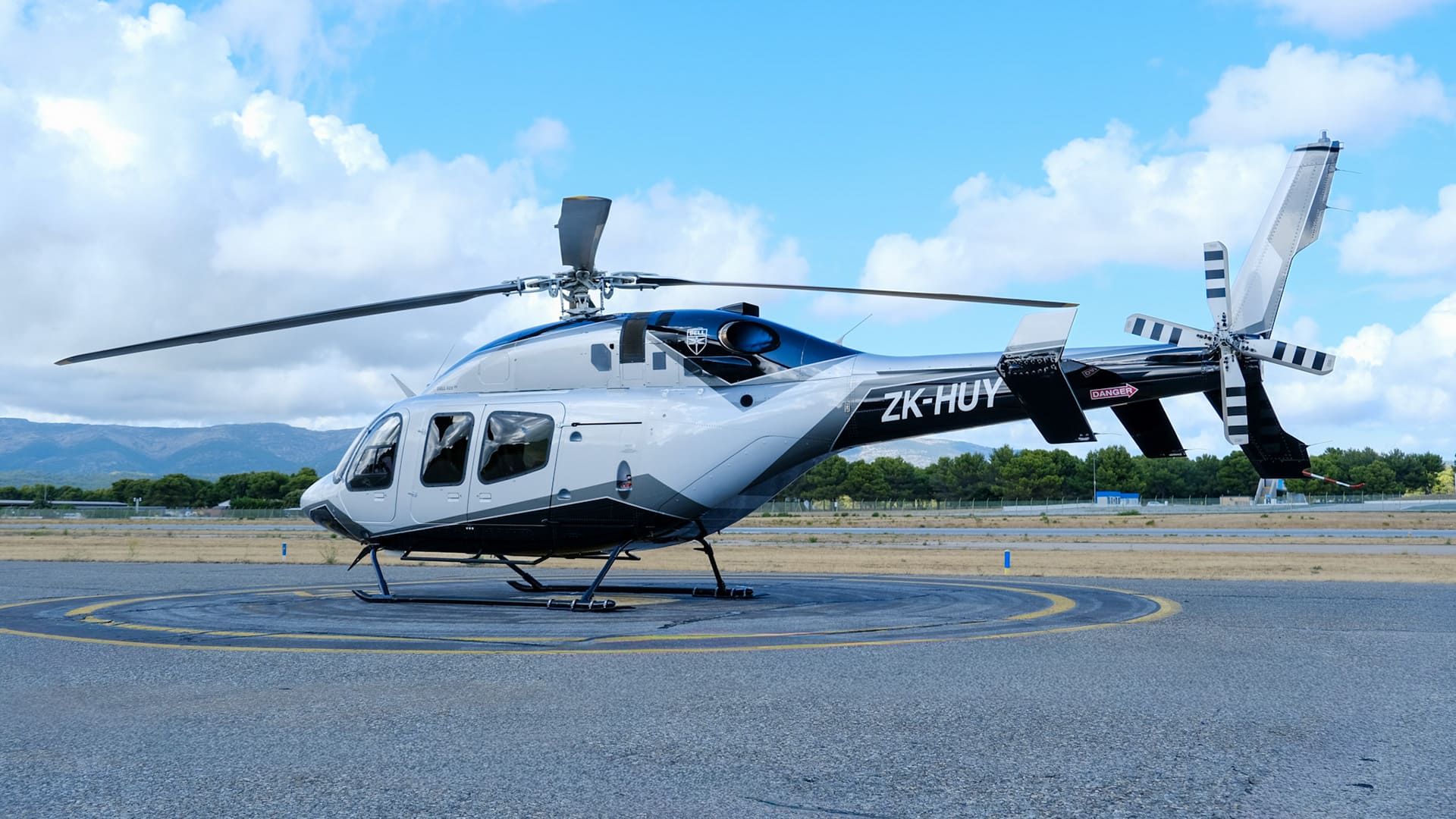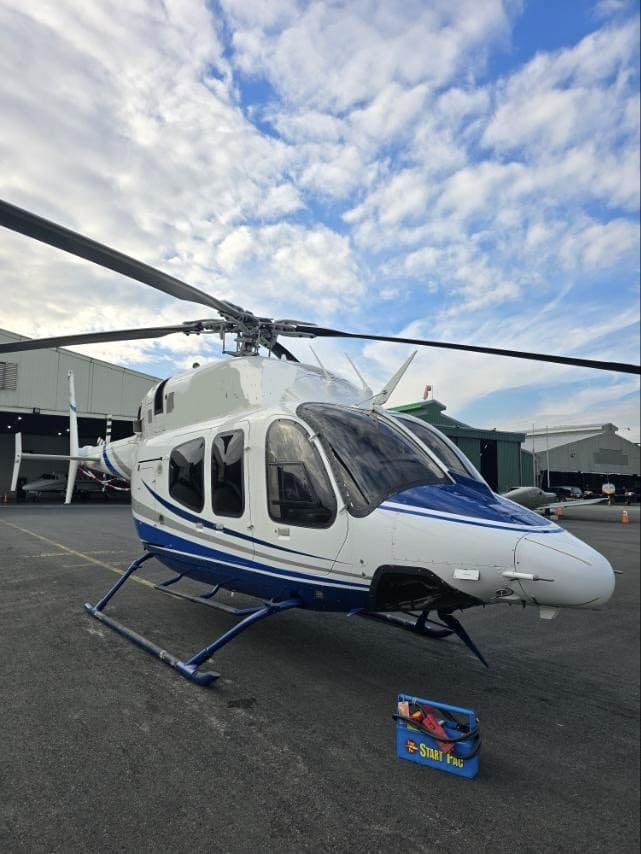

Between 25 years in public safety and six years hosting The Hangar Z Podcast, I have had a front-row seat to the best and toughest parts of this industry. Through Vertical HeliCASTS, I have talked with hundreds of aviators, unit commanders, maintainers, and engineers across the globe.
The baseline reality of airborne public safety has never changed. A properly equipped and trained aircrew with a helicopter remains the single greatest force multiplier in public safety. It saves lives, protects property, and captures dangerous fugitives when seconds dictate outcomes.
But what has changed dramatically is the operational environment beneath us.
Between soaring equipment acquisition costs, a generational workforce shortage spanning pilots and maintainers, and sworn benefit liabilities, agencies worldwide are running headfirst into a wall. The traditional internally staffed model is breaking down. Yet while the headwinds are real, a quiet operational evolution is taking shape, defined by public-private turnkey partnerships that prioritize mission availability over bureaucratic ownership.
The Unseen Crisis: The Human Pipeline and the Empty Hangar
During an in-depth conversation on The Hangar Z Podcast, longtime public safety leader and aviation consultant Terry Miyauchi discussed the reality facing unit commanders across the globe: our industry is running out of people.
While public safety aviation discussions often gravitate toward new airframes and high-tech mission equipment, aircraft do not fly or fix themselves. Across all sectors of global aviation, the numbers are staggering. Industry benchmarks from Boeing’s Pilot and Technician Outlook project that the global commercial aviation sector alone will require roughly 728,000 new maintenance technicians and more than 674,000 new pilots over the next 20 years to offset retirements and fleet growth.
In public safety aviation, that shortage has become an immediate crisis. Staffing is bleeding out from both planned and unexpected retirements, alongside fierce competition from the airlines and commercial operators. The result is vacant shifts, downstaffed ships, and agencies sitting with more airframes on the ramp than qualified crews to fly them.
For decades, agencies relied on a well-worn pipeline: bring a recruit into the academy, assign them to patrol for several years, identify the high performers with a passion for aviation, and train them internally as tactical flight officers (TFOs) and eventual pilots.
That traditional path just isn’t producing the numbers it once did.
With severe entry-level recruitment shortages across municipal policing, many patrol divisions are stripped to minimum staffing. When a chief or sheriff has vacancies on patrol, pulling a capable officer off the line to send them to an aviation unit simply is not an option. At the same time, the veteran aviators who historically filled the rosters have retired, taking their ability to staff a ship and their institutional knowledge with them.
The maintenance side of the house is under even heavier strain. A certified A&P mechanic who understands rotorcraft maintenance, dynamic component troubleshooting, and FAA compliance can virtually name their price in the corporate, airline, or defense sectors. Municipal pay scales and rigid civil service benefits struggle to compete. When an agency’s single lead mechanic retires or takes a higher-paying commercial position, the agency is left scrambling. Institutional succession planning in public safety aviation has historically been an afterthought, leaving units one unexpected resignation or medical retirement away from a hangar full of grounded aircraft. The result is not just an administrative headache. It translates directly into reduced flight availability, grounded airframes, and aircrews stretched thin trying to maintain coverage with a skeleton roster.
The Turnkey Evolution: Operational Reliability Over Ownership
For years, many of us in law enforcement aviation, myself included, were skeptical of civilian flight crews and outsourced operations. The classic argument was that you couldn’t effectively work in air support as a pilot without years of sworn street experience, an ear for radio traffic, and knowledge of police tactics.
Commercial operators like Helicopters Incorporated have come up with a solution to the problem by addressing who they put in the pilot seat.
Helicopters Inc. president and CEO Ryan Harbison joined The Hangar Z Podcast alongside Roe Conn, chief of strategic initiatives for the Cook County Sheriff’s Office, to detail how their public-private partnership functions. Harbison explained that their hiring for public safety contracts is exceptionally selective, targeting seasoned public safety aviators who already possess thousands of flight hours, instrument ratings, night vision goggle (NVG) time, and prior law enforcement experience.
“We were very intentional about going and bringing in people who were not only highly experienced from an aviation standpoint, but who had a law enforcement background,” Harbison said. “One of them ran the Fairfax County program for many years flying 429s. These are really, really experienced law enforcement pilots.”
By recruiting nationally from a pool of retired police aviators, Helicopters Inc. circumvents the classic criticism of outsourcing operations entirely. You aren’t dropping a novice into the middle of a pursuit; you’re putting a veteran in the seat who understands how these dynamic incidents unfold and knows how ground units operate.
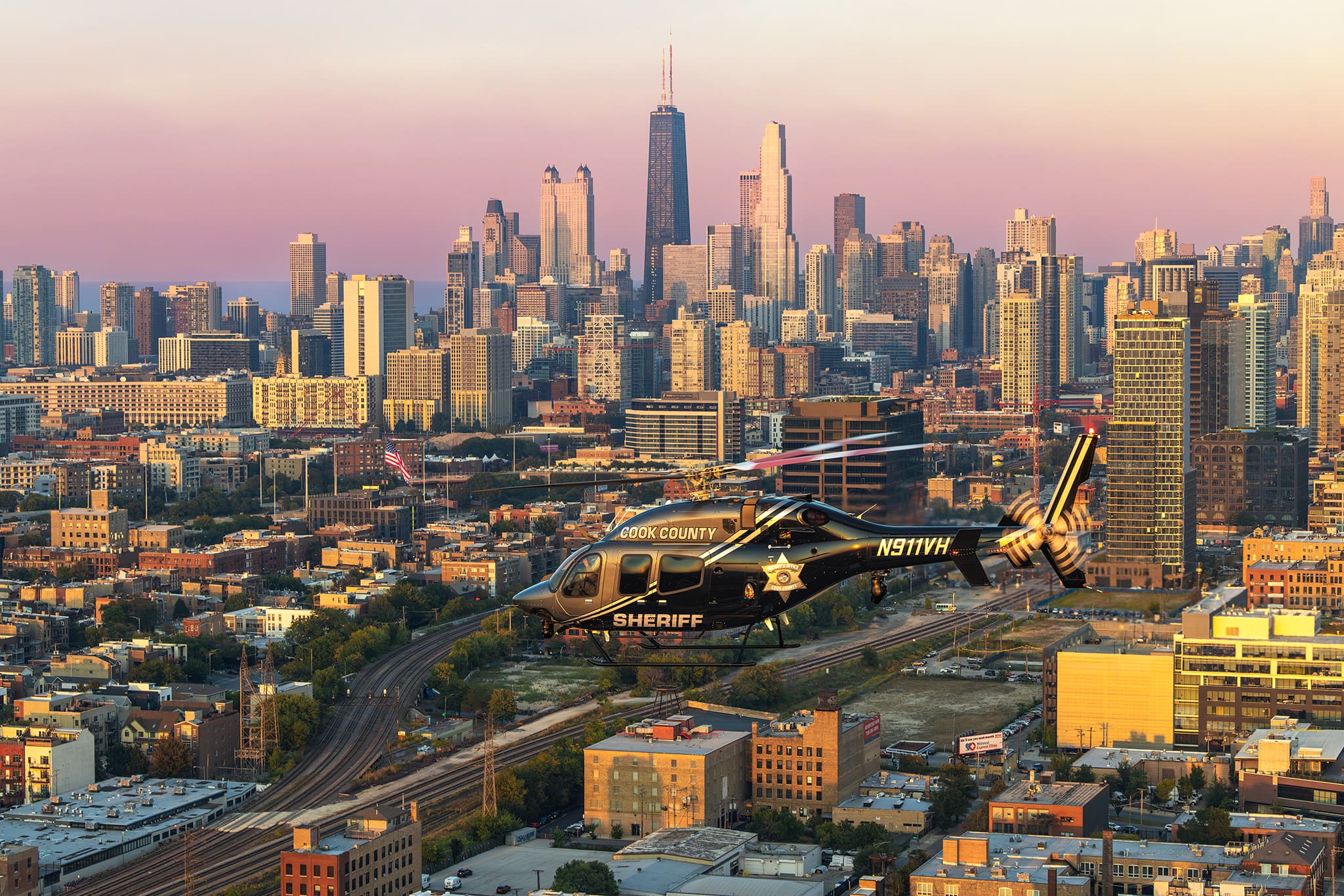
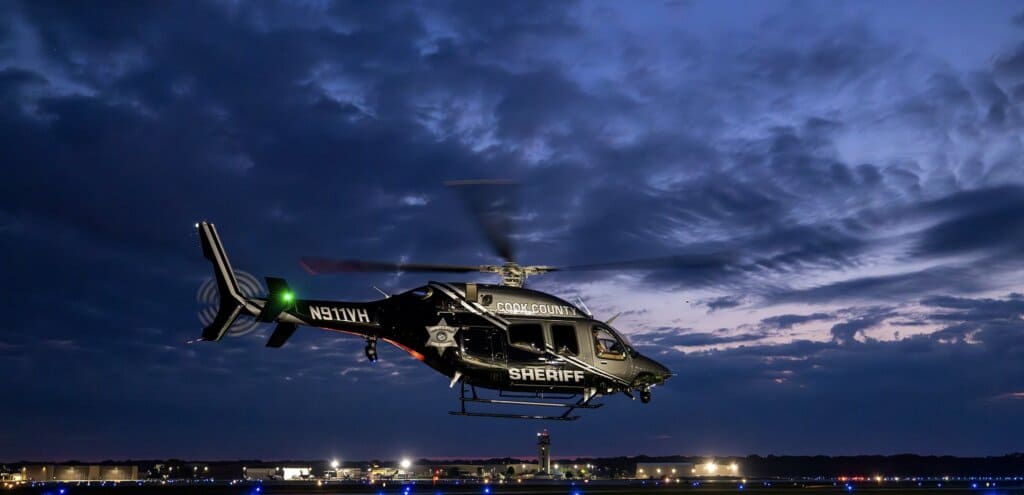
The Cook County Sheriff’s Office offers a clear blueprint for how this operational approach delivers in the field. When Cook County set out to establish an air unit, it purchased a Bell 429 and brought in Helicopters Inc. to handle pilot services, comprehensive maintenance, and insurance under a fixed-cost contract. The results have been eye-opening. Flying roughly 1,100 hours in its first year of operation with a single airframe, the unit maintained a 98 to 99 percent operational readiness rate.
That operational tempo supported tangible mission results: over 2,200 flight case reports in 12 months, 51 successful recoveries of missing and endangered individuals, and direct support to a task force that helped drive Cook County carjackings down from over 2,100 annually to the 800s.
Murphy’s law guarantees something critical will break right before a major operation. When it does, Heli Inc. doesn’t leave an agency grounded waiting on backordered parts. They surge technicians from St. Louis or fly replacement components in directly.
“The game-changer for us is having a Heli Inc. maintainer stationed right in our hangar every single day,” said Conn. “If something flags on preflight, we aren’t waiting weeks for outside contractors or parts on backorder. They tap into their national inventory, parts arrive within hours, and the ship is back on the schedule.”
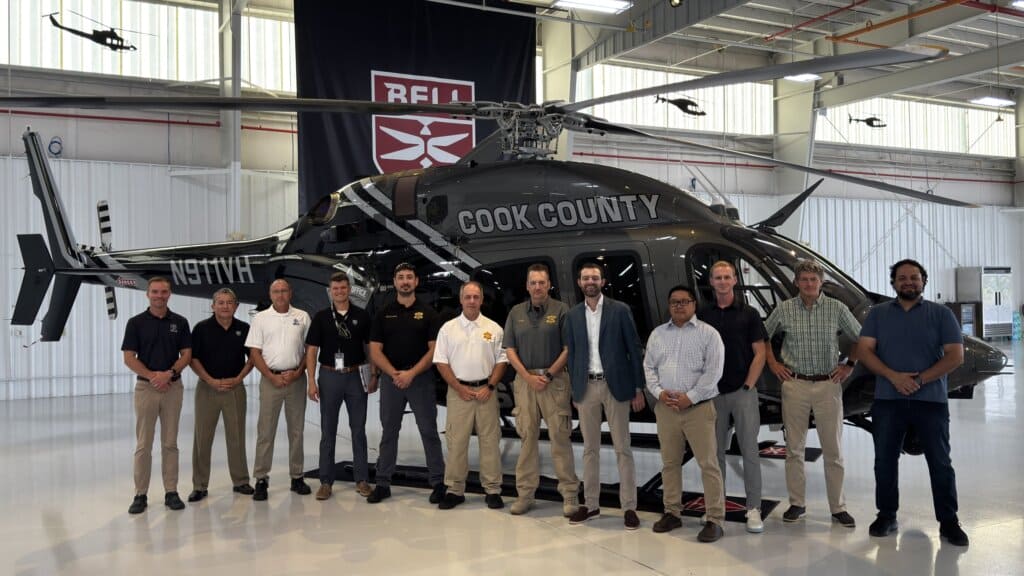
Harbison said this fleet-wide redundancy is something most agencies simply cannot match: unless an operator can distribute overhead across dozens of aircraft and national markets, warehousing that scale of parts inventory and specialized tooling is unfeasible on a city or county budget.
Having an agency-assigned TFO preserves that irreplaceable local knowledge, matching how air medical operations have functioned successfully for decades. Just as air medical programs pair commercial contract pilots with local municipal flight paramedics, turnkey airborne law enforcement pairs vetted public safety pilots with sworn TFOs. The agency retains full command of the mission and tactics while the commercial operator guarantees that the aircraft is available to support the men and women on the ground.
The Road Ahead
The airborne public safety community cannot afford to operate under the assumption that traditional methods will survive simply because that is how things have always been done. Agencies are facing undeniable staffing shortages, compounding benefit liabilities, and a demand for elevated operational readiness. As Terry Miyauchi reminds us, our mission is to save lives, protect property, and apprehend suspects. The aircraft and the administrative framework behind it are simply the delivery mechanism.
The industry data and our frontline conversations make one reality clear: traditional staffing and maintenance models cannot weather this storm alone. To stay viable, agencies must be open to proven public-private partnerships like the turnkey model Helicopters Incorporated and Cook County have validated. It provides a sustainable path forward that keeps crews supported and aircraft flying, ensuring air support is overhead to complete missions safer, more effective, and far more efficient.