
A true end-to-end solution is prized in a highly-regulated industry like aviation.
Companies that can deliver a valuable product or service from concept to installation – and then support it throughout the lifecycle – are the ones that inspire customer loyalty and repeat business.
Founded in 1986 in Penticton, British Columbia, SKYTRAC Systems is just such a company. In the beginning, SKYTRAC’s claim to fame was a simple flight tracking service powered by VHF transmission devices. Today, its 140 full-time employees who specialize in providing cutting-edge satellite communication (Satcom) hardware and avionics accessories.
Four decades after it was founded, SKYTRAC has experienced incredible growth, fuelled by rapidly evolving technology and the operational needs of its 800 global customers.
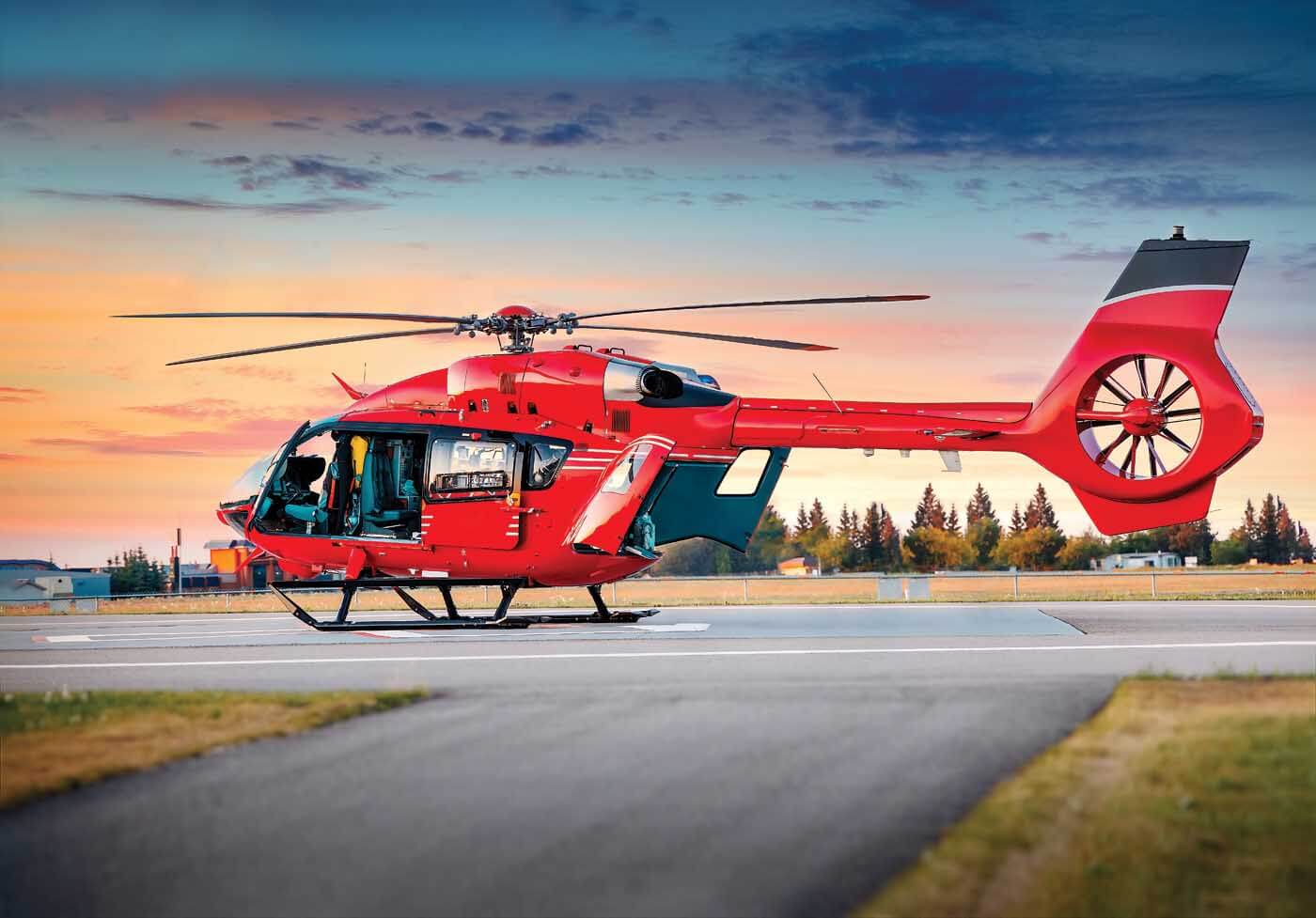
“Our products are installed on close to 10,000 fixed-wing and rotary-wing aircraft in more than 100 countries,” said Jan van der Heul, VP of Sales & Marketing at SKYTRAC. “Predominantly, our customers are non-scheduled special mission operators in sectors such as emergency medical services (EMS), airborne law enforcement, aerial firefighting, oil and gas, utility, search-and-rescue, and intelligence gathering.”
To its customers, SKYTRAC is an attractive option because it provides full-circle hardware solutions backed up by ground flight following and monitoring services.
“We can handle the STC (supplementary type certificate) approval to put equipment on an aircraft, so there is the certification component, too,” added Van der Heul. “Lastly, we can handle any custom engineering they need us to do. It’s really end-to-end, versus just one piece. Customers really appreciate that.”
Of late, SKYTRAC’s clients have been focused on tapping into operational intelligence. From simple position reporting, the company has moved into providing and supporting flight data management systems that enable greater proprietary knowledge, including aircraft performance anomalies and exceedances.
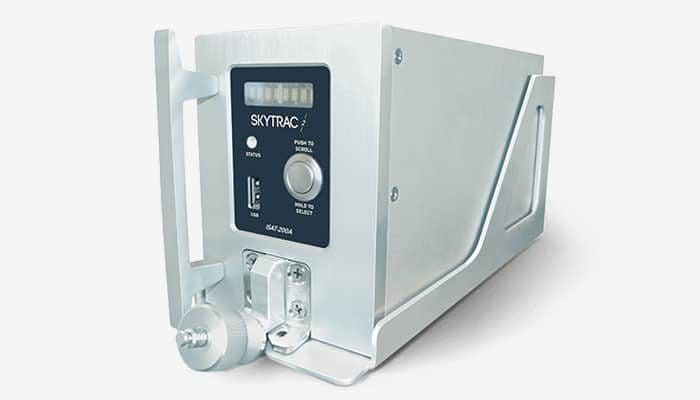
“The ISAT-200A is our flagship product line that has evolved over the years,” shared Van der Heul. “There are thousands of them out there. It is a narrowband L-band satellite data unit that provides cost-effective flight data acquisition as well as voice and text communications.”
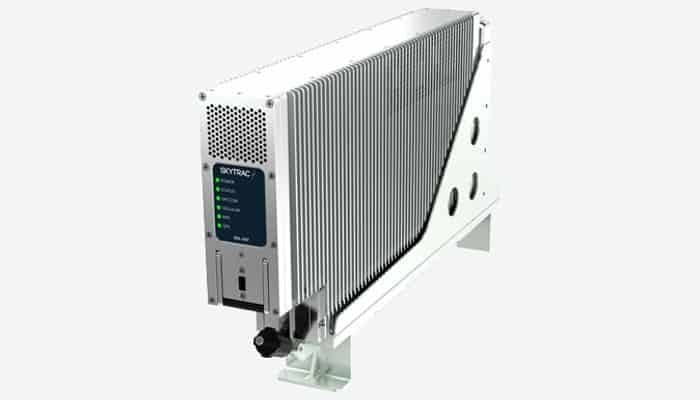
For special mission operations that require a higher bandwidth for video downlink, flight following, push-to-talk, and true pole-to-pole satellite coverage, operators choose SKYTRAC’s newest product, the SDL-350 broadband L-band Iridium Certus Satellite Data unit.
Steven Lepage, SKYTRAC’s IT & Software Development Manager, explained that the Iridium Certus broadband network opens a whole new frontier of operational intelligence, including iPads in the cockpit, electronic flight bags (EFBs) connected to the ground, and data transfer to ground support staff.
The next frontier for SKYTRAC is an expansion of the SDL product line. This expanded product line aims to harmonize capabilities such as voice, video streaming, and data to offer the complete operational picture for operators.
After that, Lepage said it will be “all about the data” and finding ways to tap into added value through artificial intelligence (AI) applications.
“We listen to our customers to find out their needs and then execute to save them money,” he said. “We’re a versatile company that never shies away from a challenge, and we can provide a full range of services.”
SKYTRAC believes AI can help streamline customer operations, planning and costs. For example, if an airframe is regularly in maintenance, it could advise operators to stock more of the most commonly-used parts.
“As we are collecting most of the flight data on these aircraft and analyzing it, there is a clear opportunity to leverage AI to provide even more value to customers, freeing up capacity with the operator so they no longer need to search for trends,” pointed out Van der Heul.
Finally, in line with SKYTRAC’s mission to deliver end-to-end solutions, he said the company’s goal is to create one integrated portal for any of the software solutions currently used by its clients.
“Our answer is to start integrating those software applications into our platform, so there is one entry point for customers for EFBs, flight planning and following, operational maintenance, crew scheduling, engine and landing data, and more.”
To conclude, Van der Heul reiterated that operators want a solutions provider, not just hardware or software.
“That’s the real need we meet – design approval, certification, engineering, integration engineers, tech support engineers – SKYTRAC is focused on helping customers onboard technology and drive end value.”