
The Army and the Federal Aviation Administration (FAA) are moving to implement safety recommendations issued by the National Transportation Safety Board (NTSB) following its investigation in the January 2025 mid-air collision between a passenger jet and U.S. Army helicopter near Washington Reagan National Airport (DCA).
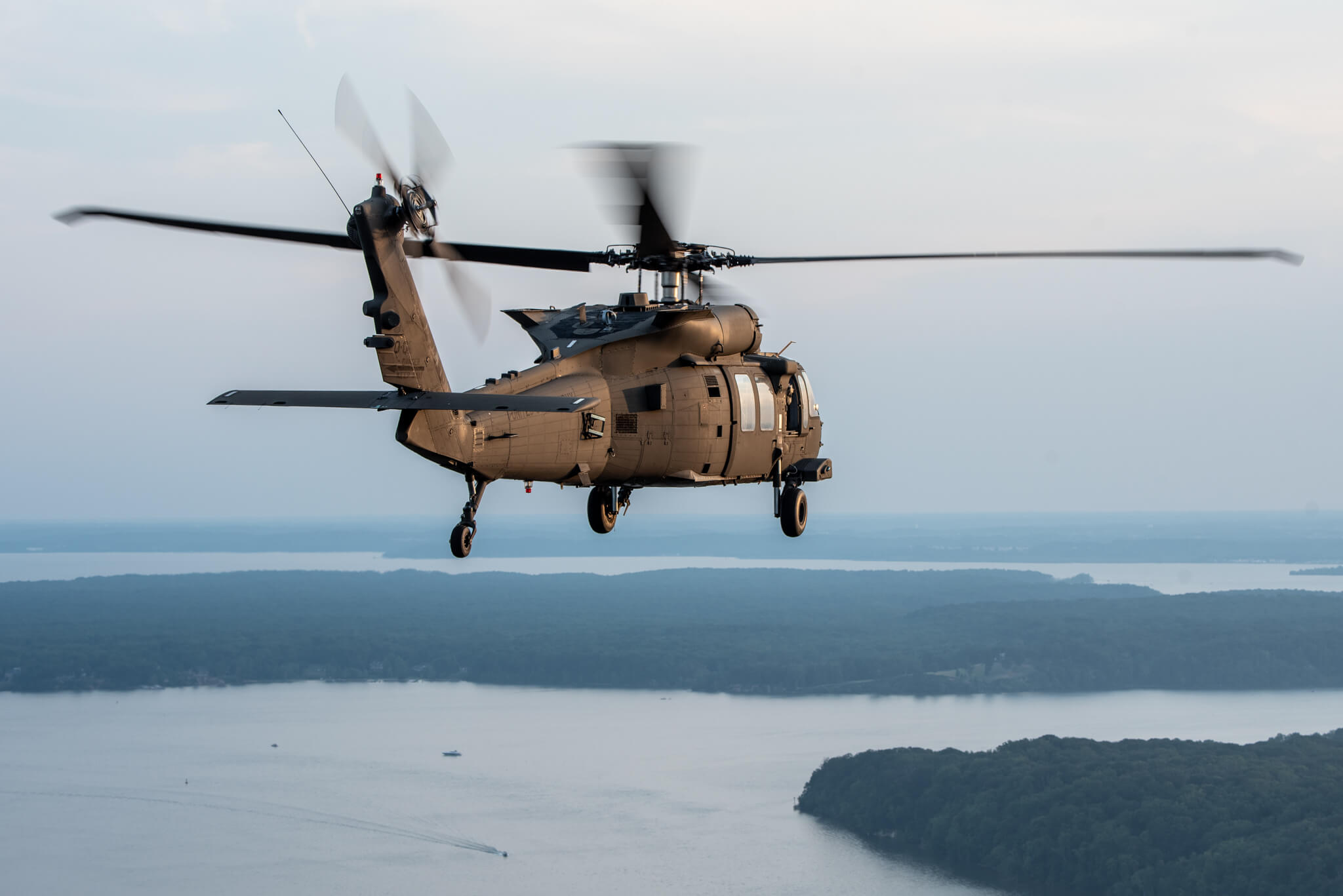
The incident killed all 64 aboard an American Eagle CRJ700 commuter jet and three people on the Army Black Hawk helicopter, which had been conducting a night vision goggle qualification mission.
The NTSB issued the recommendations as part of its final report on the accident in February 2026 after finding a plethora of deficiencies with area helicopter routes, Army helicopter operations in the DCA area, and the conduct of air traffic control — both in the DCA tower and the Potomac Consolidated TRACON (PCT) Terminal Radar Approach Control, and the management of both those facilities by the FAA’s Air Traffic Organization (ATO).
Of the 33 recommendations issued to the FAA, 11 remained classified as “Open—Unacceptable Response” as of earlier this week. In his formal reply to the NTSB, FAA Administrator Bryan Bedford said that most of those open recommendations would be implemented or resolved by the end of May 2027 in conjunction with the FAA issuing already scheduled updates to manuals, policies, and procedures.
Almost all the “open unacceptable” FAA recommendations deal with the conduct of ATC at DCA and Potomac. They involve issues including: supervisor workload limits, scenario-based controller training, more effective testing and training, development of a real-time operational risk assessment tool for threat identification and mitigation, and prompter drug and alcohol testing for controllers after an incident. Other open items include prompt notification of parties after near mid-airs or TCAS (traffic collision advisory system) resolution advisories, and developing a near miss/close encounter database.
The most significant recommendation is to mandate ADS-B (automatic dependent surveillance broadcast) In with cockpit traffic display and audible alert where ADS-B Out is already required. The NTSB said simulations suggested that ADS-B In would have given the commuter jet crew a conflict alert 59 seconds before impact and alerted the helicopter crew 48 second prior to the accident.
Separate legislation in the U.S. House and Senate (The ROTOR and Alert Acts) would institute an ADS-B In mandate, but neither had cleared both chambers before Congress began a two-month adjournment this week. A portable ADS-B in solution for a light helicopter could cost less than $1,000, however, a certified in-panel installation could run from $5,000 to more than $15,000, depending on hardware selected. And that amount easily tops $100,000 for installations in transport category fixed-wing aircraft.
The FAA already has implemented significant changes in both the DCA area and nationwide following the accident.
In the National Capital region, it closed the accident helicopter route (Route 4), banned non-essential helicopter and powered lift traffic proximate to DCA, prohibited runway operations on both the DCA accident runway (15/33) and another secondary runway (4/22) when helicopters are in the area, and limited helicopter traffic on other nearby routes. It also updated the local charts for area airports, moved existing helicopter routes and zones farther from DCA, and eliminated the option for visual separation between fixed-wing and helicopters within five miles of DCA. All aircraft in the area, including military aircraft, are now required to be transmitting ADS-B Out. (The accident helicopter was not transmitting ADS-B Out.)
Significant local air traffic control changes include slashing the DCA arrival rate from 36 to 30 per hour, increasing tower staffing (just one controller was handling all fixed-wing and helicopter traffic the night of the accident), and limited time-based flow departure scheduling at PCT.
But the accident also had national implications, especially in large U.S. metro areas where helicopters and fixed-wing traffic often mix. Effective March 18, 2026, radar separation rather than visual between helicopters and fixed-wing traffic became mandatory wherever helicopters cross airport arrival or departure paths in all Class B and C airspace and Terminal Radar Service Areas (TRSA).
The sudden change (GENOT JO 7110.801) caused widespread consternation among helicopter operators, particularly in Southern California and the New York metro areas, due to the delays, added distances, and occasional airspace entry denials it sometimes caused. While the order is scheduled to expire on Dec. 24, 2026, in testimony before the House Subcommittee on Transportation, Housing, and Urban Development (THUD) on Sept. 15, 2026, Bedford called it “a fantastic safety success,” indicating that the order almost certainly will be extended/reissued or reformatted. The FAA also is reviewing published helicopter routes nationwide.
The accident also triggered changes at U.S. Army aviation, several made well before the NTSB issued formal recommendations to it and the Department of War. ADS-B Out must now be on, unless aircraft are enroute to a “sensitive” location, and the Army has slashed helicopter flights in the region.
Use of the Pentagon’s helipad (JPN) will now be confined to the Secretary of War, his deputy, and Joint Chiefs of Staff. All other senior leaders must now fly out of nearby Fort Belvoir, Virginia. Previously, all three-star officers and above were cleared to use the Pentagon helipad. Worldwide, the Department of War has 848 three-stars and above as of September 2026.
The Army also has issued guidance concerning altimeter settings. Disruption of airflow caused by wing-mounted auxiliary fuel tanks resulted in the crew of the accident helicopter getting a barometric altimeter reading that was 200 feet above its actual altitude.
The NTSB does not classify any of its recommendations made to the Army and the Department of War as “open—unacceptable response.” However, there are several listed as “open—not fully implemented.” Recommendations the NTSB made to the Army mainly focus on DCA area specific training, implementing flight data monitoring for all Army helicopters that operate in the National Airspace System (NAS), and safety management system (SMS) implementation and safety reporting.
The quality and clarity of radio transmissions made from the accident helicopter were poor and ADS-B Out was not operative. The NTSB recommended that the Department of War Policy Board study radio quality for all its aircraft operating in the NAS and inspect all transponders.
The Army concurred with most of the NTSB’s recommendations in theory but is working the issues on its own timetable and in its own way. It is in the process of rolling out a service-wide Army Safety and Occupational Health Management System (ASOHMS), scheduled to be fully implemented by the end of 2030, that is a safety management system that covers all aspects of operations, not just aviation. It also has authorized the purchase of 1,600 ADS-B In units. The Army currently operates approximately 4,000 helicopters between its active, guard, and reserve units.
The Department of War is in the process of upgrading its equipment system-wide for tactical and aviation radios. In June, the Army began flying evaluations of 3D spatial audio on Black Hawks designed to spatially separate transmissions and alerts from multiple radios inside headsets. It also is in the process of modernizing its current radios with crypto and waveform updates.
The NTSB also recommended that all new production aircraft that require traffic collision alerting systems (TCAS) be equipped with more modern and precise airborne collision avoidance system or ACAS X/Xr systems, which its simulations show cut the risk of mid-air collisions by up to 90%. If the accident helicopter been equipped with ACAS Xr (helicopter variant), it would have had a traffic alert 73 seconds prior to impact, the NTSB concluded. ACAS is particularly effective for mitigating “nuisance alerts” during low altitude operations. However, consensus standards for Xr have yet to be published and a technical standard order (TSO) has yet to be issued by the FAA. Both could come late this year. The timetable for any FAA related equipment mandate remains uncertain as does the unit cost for a light helicopter installation.