





An enormous cash pyre continues to fuel vertical aviation’s promise of a green energy future. Collectively, the top 10 eVTOL companies have burned through an estimated $12 billion — four times what was lost during the very light jet craze of the late 1990s, and six times Boeing’s current annual profit. Almost monthly, an eVTOL company announces another massive cash infusion. In January, it was Eve Air Mobility, the $1.2 billion — so far — Embraer spin-off, trumpeting a new $150 million inflow of “debt financing” from a syndicate of participants from Brazil and Japan.
Indeed, the big eVTOL players have individually run up “accumulated deficits” that are simply staggering; Joby, $2.66 billion; Archer, $1.8 billion; Vertical Aerospace, $1.5 billion; and Lilium, $1.5 billion (before the lights were turned off on the latter via insolvency and it became a parts and pieces sale). Quarterly losses for each of the big players are in the $100 million to $400 million range. And that’s not taking into account the massive future investment required for serial production to achieve the economies of scale needed to make these flying air taxis “Uber in the sky.”
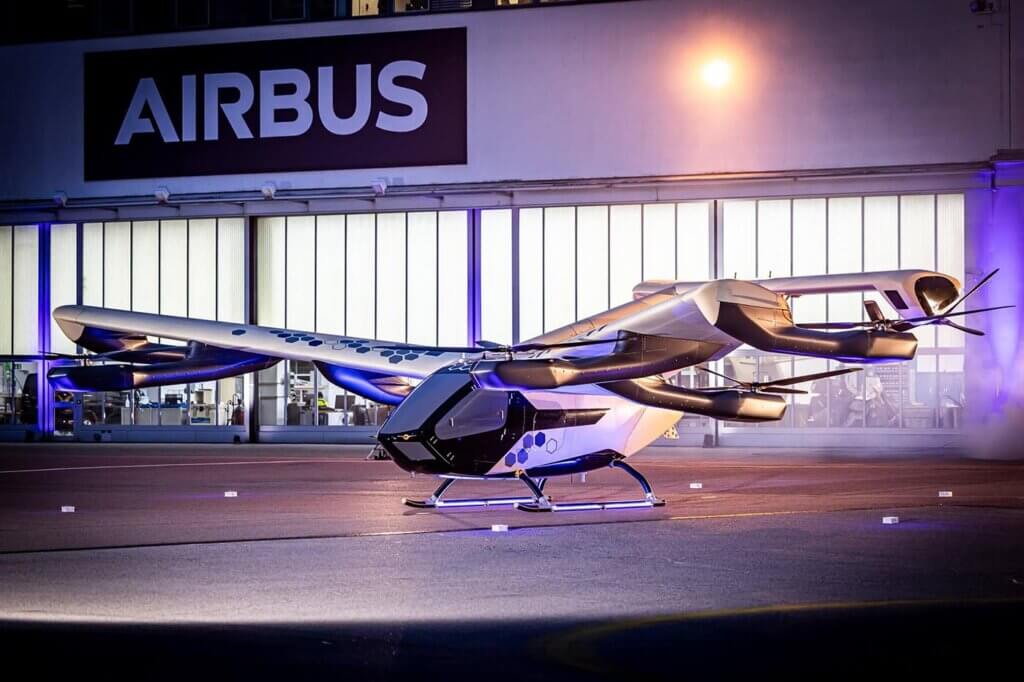
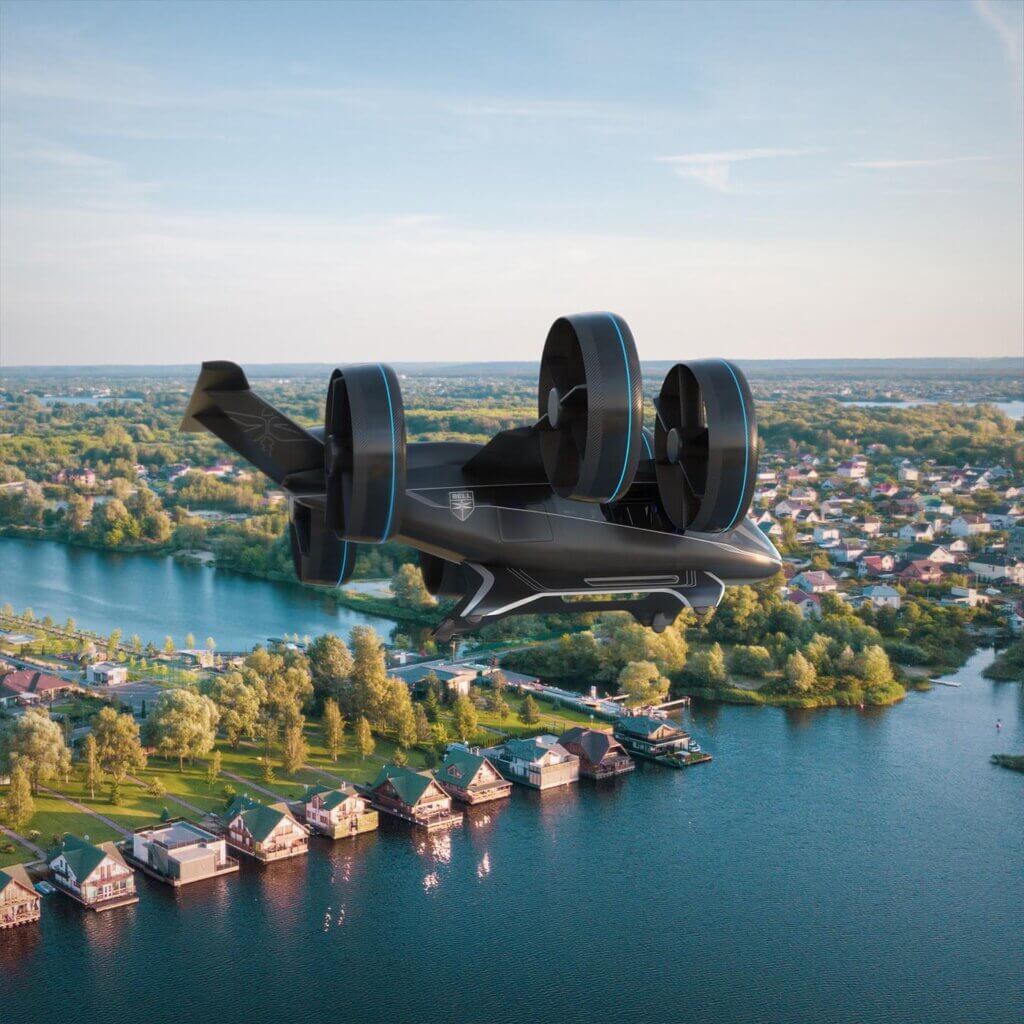
Confronted with this unappetizing math, two big players, Airbus and Textron, the latter the parent of Bell, have effectively withdrawn from the eVTOL sweepstakes. In January 2025, Airbus shelved its decade-old CityAirbus program, noting that the necessary battery technology and market conditions sufficient to support a product launch were “not necessarily there yet.”
“We clearly see on the battery side the need to continue to improve the performance to reach what we consider the minimum level of performance and mission,” said Airbus Helicopters’ then-CEO Bruno Even.
Similarly, Textron announced the elimination of its eAviation division in October 2025 after pausing/slowing down its Nexus eVTOL program in July. The division had recently posted quarterly losses of $15 million.
Nevertheless, despite technological and market concerns, the cash spigot remains on for the leading eVTOL companies, driven in part by investors motivated by recent enormous compound annual growth rate (CAGR) predictions between now and 2033 — anywhere from 12% to 55%. But in the U.S. at least, much of this hinges on the performance and speed of regulators.
To that end, in September 2025, the Federal Aviation Administration (FAA) announced its Electric Vertical Takeoff and Landing and Advanced Air Mobility (AAM) Integration Pilot Program (aka eIPP) — a three-year public-private cooperative program designed to speed safe integration of eVTOLs into the National Airspace System (NAS).
The objectives of the program are to generate real-world data to shape future regulation and guidance, test and validate operational concepts, and demonstrate public benefit covering passenger, cargo, and public service operations — while demonstrating automation and safety technology. Several leading eVTOL companies, including Archer, BETA, Joby and Wisk, announced their intention to participate. The eIPP aligns with the FAA’s AAM National Strategy, unveiled in December 2025.
The strategy establishes a variety of ambitious timelines and widespread goals for AAM. Beginning in 2027, it calls for demonstration operations using modified existing airport infrastructure; by 2030, expanded operations in urban and rural areas to locations including privately-funded vertiports; and by 2035, advanced, fully-autonomous operations in mixed airspace within the NAS.
The strategy acknowledges that an enormous amount of infrastructure and whole-of-government support will be necessary to achieve a meaningful AAM future. This includes the modernization of low-altitude airspace management; optimizing existing airports and heliports to meet short-term demand while developing new standards for vertiports; addressing attendant electrical grid needs; applying needed security precautions; providing best practices guidance to local authorities; and integrating workforce development and automation requirements. The strategy builds on a 2024 FAA SFAR (Special Federal Aviation Regulation) No. 120 (14CFR Part 194) governing powered lift operations, pilot certification and training, operational rules, and commercial operations.
The European Union Aviation Safety Agency (EASA) is continuing to advance its regulatory framework as well, issuing new and more detailed guidance in July 2025 that covered air operations, vertiports, and air traffic management. It continues to work with the FAA and the UK Civil Aviation Authority on standards and aircraft certification harmonization, although significant differences remain, with EASA favoring more prescriptive rules, while the FAA has opted for a more performance-based rules framework.

A hybrid model
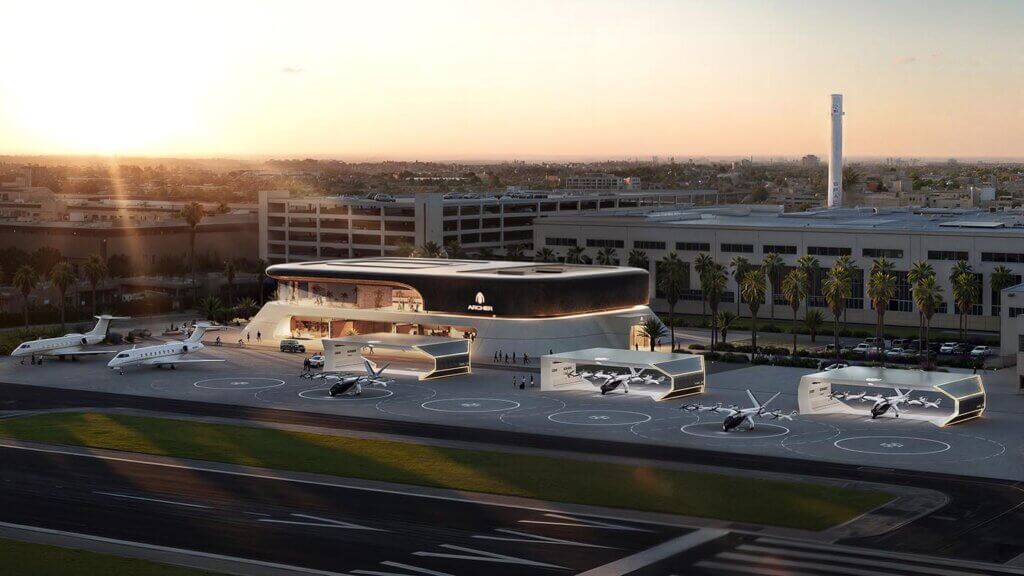
Meanwhile, even while confronting a fluid regulatory environment, eVTOL companies continue to discuss progress. In January, Archer announced that it had been selected by Serbia as the preferred eVTOL partner for Expo 2027 in Belgrade, a deal that could involve up to 25 Midnight aircraft. Flight testing in the UAE concluded in November 2025 and commercial service could begin there later this year. Archer also plans to launch commercial service in Miami and in Los Angeles, in support of the 2028 Summer Olympic Games. In late 2025, Archer acquired control of the Los Angeles area Hawthorne Airport, once the manufacturing site of Northrop Aircraft.
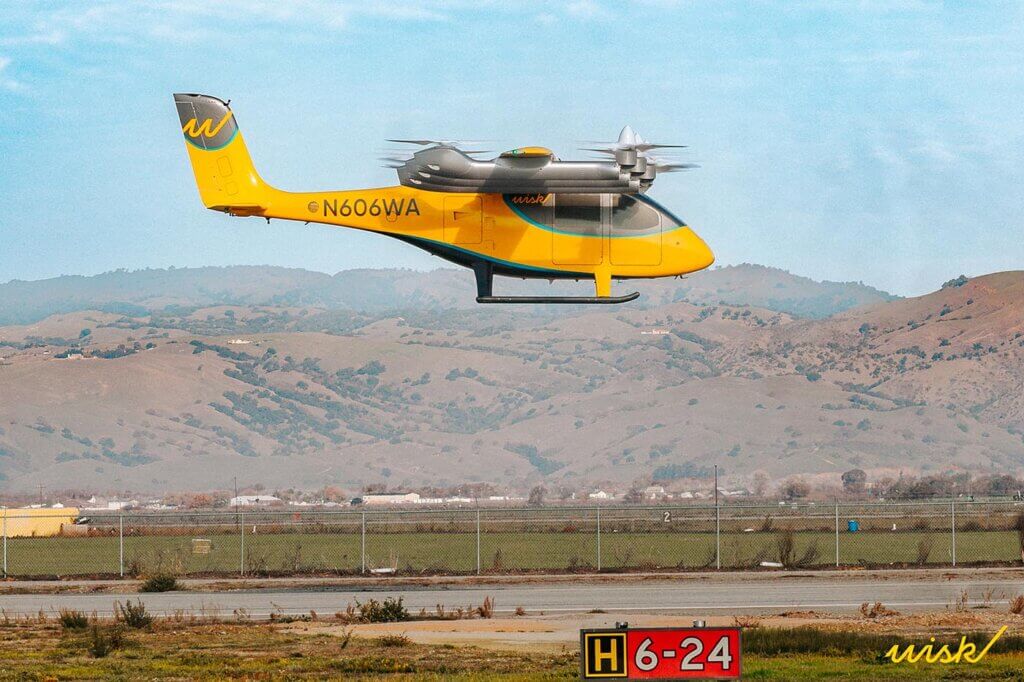
In December, Boeing-baked Wisk Aero conducted the first flight of its Gen 6 autonomous, four-seat eVTOL prototype, and believes the aircraft has a big future in India, notorious for the snarling of its urban roadways.
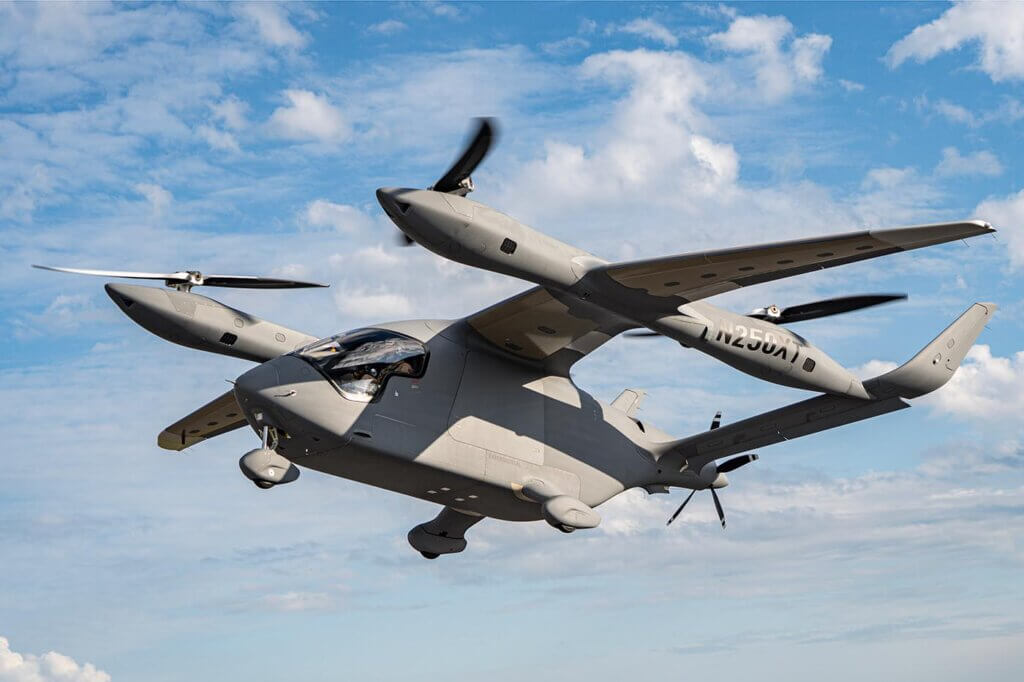
Beta’s fleet of ALIA electric VTOL and CTOL (conventional takeoff and landing) aircraft achieved 100,000 nautical miles (185,000 kilometers) flown in 2025 from more than 50 airports in the U.S. and Europe and anticipates type certification for its VTOL model in 2027, with operational trials potentially starting later this year. Its initial public stock offering (IPO) raised more than $1 billion in late 2025.
However, while battery technology continues to mature, hybridization is increasingly seen as the bridge technology to achieve the target of lower vertical aviation emissions while delivering commercially viable range. Beta’s ALIA MV250 cargo/logistics model will employ a turbogenerator, likely a GE CT7 family model, to generate electrical power. Beta and GE announced an agreement to develop the turbogenerator in September 2025 and GE is a $300 million investor in Beta. The hybrid solution will give the MV250 significantly longer range and the ability to carry more payload than its battery-only counterpart. Beta is developing the fully-autonomous aircraft in partnership with Near Earth Autonomy under the U.S. Air Force’s AFWERX/Agility Prime Program.
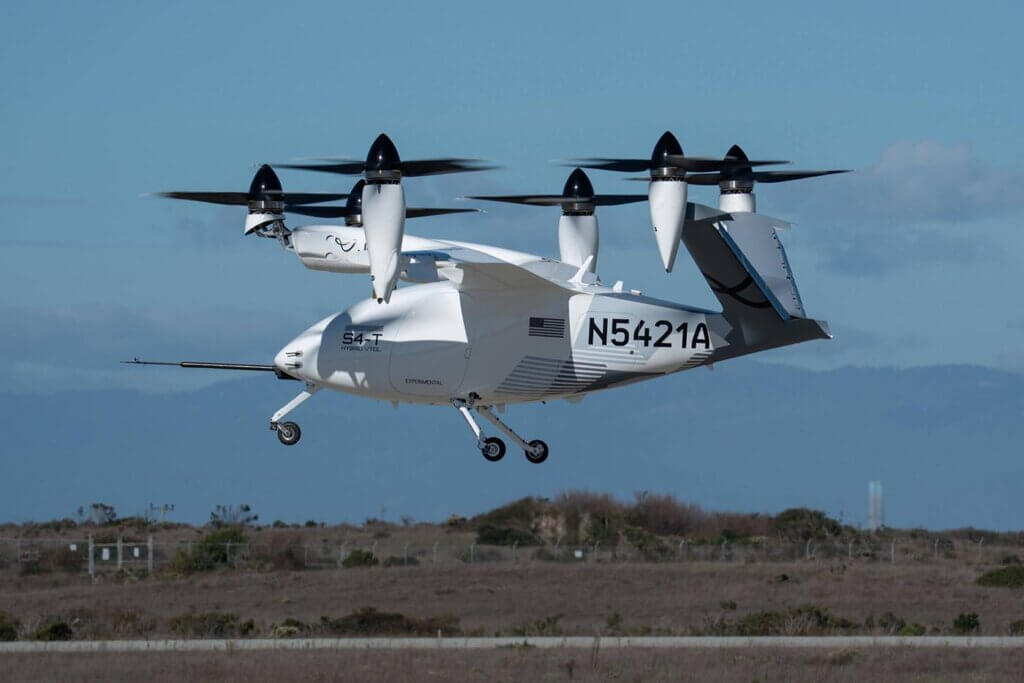
Similarly, Joby is developing a hybrid model in partnership with L3Harris Technologies and conducted the first flight of its S4-T optionally piloted VTOL in November 2025. The aircraft is being developed for both military and civilian applications. Separately, Joby demonstrated hydrogen-electric fuel cell propulsion in 2024, making a 523-mile (841-kilometer) flight with an aircraft powered by it.
But the hybrid approach is also being tested in conventional helicopters. While Bell’s Nexus eVTOL was to use a hybrid electric propulsion system developed in cooperation with Safran, in early 2020, the company also began testing what it called the Electrically Distributed Anti-Torque System (EDATS) on a Bell 429 light twin that used electric fans in the tailrotor connected by a fly-by-wire linkage to the pilot.
Airbus is scheduled to begin flight testing a hybrid powerplant in its PioneerLab demonstrator next year in Donauwörth. The modified H145 twin will replace its two Safran Arriel 2E engines with a single Pratt & Whitney Canada PW210 derivative that will function as a turbogenerator powering two Collins Aerospace 250-kW electric motors. The configuration is expected to produce significantly reduced emissions via a 30% fuel burn reduction.
Various models of Robinson helicopters have been, or are in the process of being fitted with battery and hydrogen systems dating back to 2018, when one converted to battery power with magniX motors flew 34 miles (55 kilometers). Last year Robinson announced that it was teaming up with magniX to develop a battery-powered R66, with first flight targeted for 2026. In March 2025, an R44 equipped with magniX motors and a hydrogen fuel cell made its first flight.
But perhaps the most ambitious hybrid program announced to date is Sikorsky’s HEX (Hybrid Electric Demonstrator) tilt wing VTOL, which could provide the foundation for an entirely new family of civil aircraft. Hover and first flight could come later this year or early next. The aircraft will be powered by a GE CT7 turbogenerator powering electric motors with battery augmentation and back-up. Performance for the initial aircraft include a range greater than 500 nm (925 kilometers) and a maximum gross weight of 9,000 pounds (4,080 kilograms). That could eventually be scaled to 30,000 lb. (13,600 kg). By way of comparison, a Sikorsky S-76D has a maximum takeoff weight of 11,875 lb. (5,385 kg). Maximum forward speed is expected to be just shy of 300 knots. Plans are for the HEX to have fully autonomous capability, powered by Sikorsky’s Matrix system.
And, of course, a variety of OEMs continue to test their turbine engine helicopters with sustainable aviation fuel (SAF) — the fastest and least complicated way to slash CO2 emissions up to 80%. While SAF blends have been successfully tested since 2010, beginning in 2021 a variety of helicopters and engines have been tested with 100 percent SAF. In 2022, Airbus completed the first flight with 100 percent SAF in both engines using an H225. The following year, Leonardo flew 100 precent SAF in an AW139 twin. In February 2023, Bell made the first flight of a single-engine helicopter using 100 percent SAF with a Bell 505 fitted with a stock Arrius 2R engine.
Bell also is engaged in a long-term flight test with a dedicated 505 using blended SAF. As of November 2025, that helicopter has flown for 700 hours on the blended mix with no related maintenance issues reported.
As of today, most major OEM helicopters are certified to burn a mix of up to 50 percent SAF. The fuel itself remains expensive, with a current spot price of 2-5 times that of Jet-A for 100 percent SAF and at least a $1 to $2 gallon premium for even small amount blends. In the U.S., tax credits that run through 2029 can be used to offset most of that cost delta.