




On a rainy roadside in Bavaria, the first member of the public to arrive at the scene of a collision dials 112, the emergency number. A well-oiled — though unfortunately well-used — system immediately swings into action.
In a nearby control room, the triage process quickly identifies that advanced medical care is required. On the dispatcher’s Rescue Track screen, the locations of DRF Luftrettung helicopters appear in real time.
The nearest aircraft shows as available, and the alert goes out.
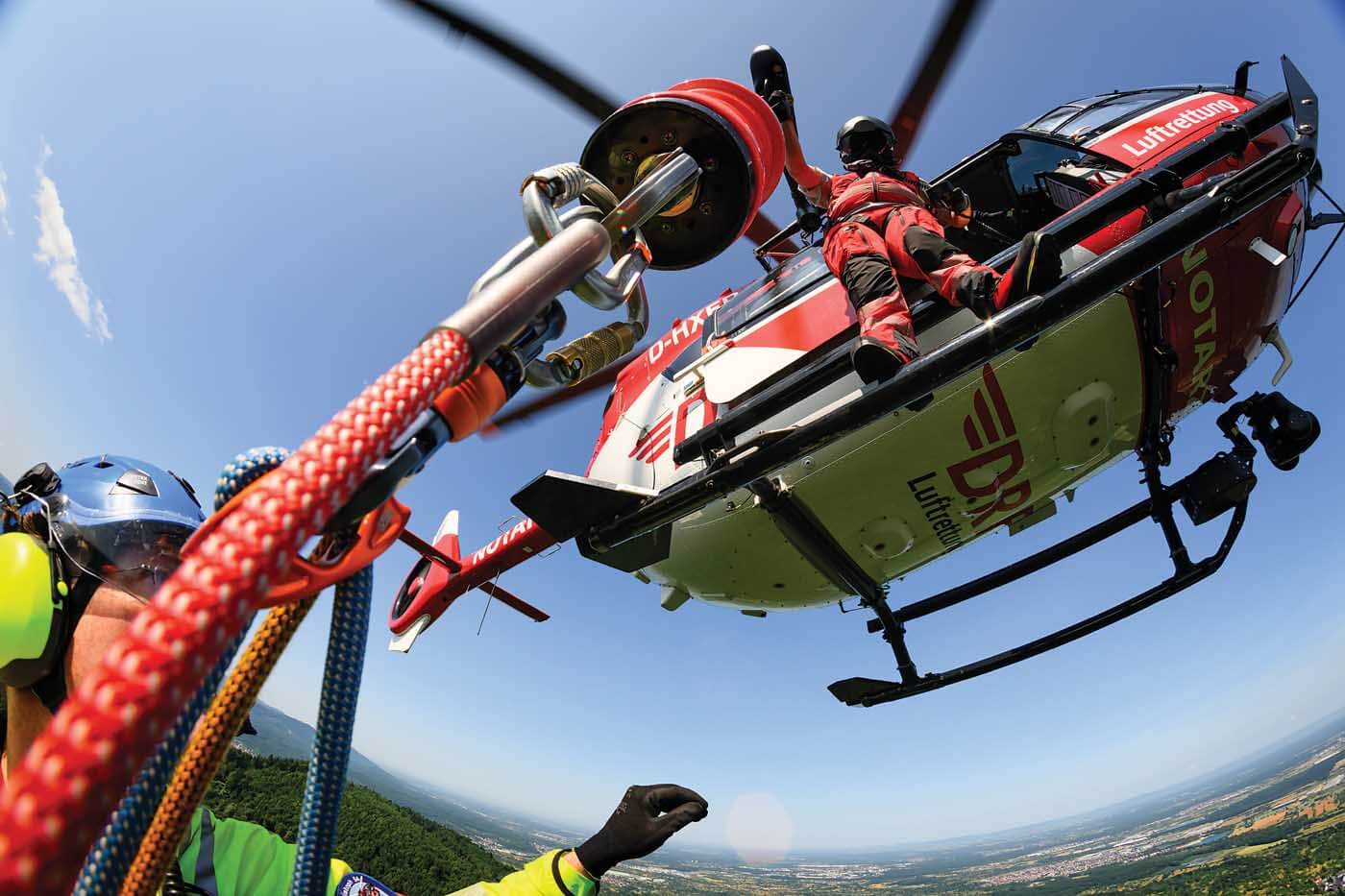
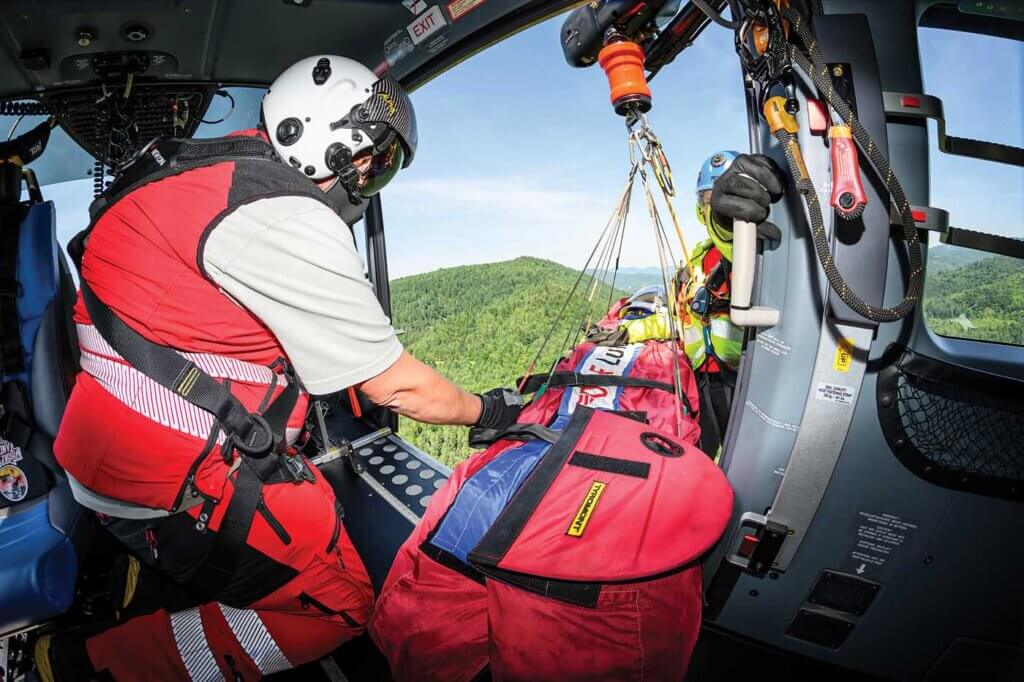
Several miles away at the rescue helicopter base, turboshaft engines begin to spool up. Details of the accident location and casualty are noted, and the aircraft is airborne within minutes. On board are a trauma doctor, a paramedic, and the kind of medical equipment normally reserved for emergency rooms. They will be on scene in about 12 minutes.
This is emergency response in modern Germany — a process repeated by DRF Luftrettung’s fleet around 100 times each day. It is a precision system refined over five decades. But it wasn’t always this way.
“There was practically no emergency help,” recalled DRF Luftrettung spokesperson Stefanie Kapp, describing the situation in Germany in 1969, when eight-year-old Björn Steiger was struck by a car on his way home from a local swimming pool.
Medical assistance took nearly an hour to reach him, and despite the best efforts of everyone involved, he died on the way to the hospital — not from his injuries, but from shock.
Kapp explained that this tragedy became the catalyst for what would eventually become DRF Luftrettung. “The response was too slow, and so the [Steiger] family founded an organization to further emergency treatment,” she said. “They believed it was important for air rescue to be part of that.”
DRF Luftrettung was founded in 1972 and began air operations the following year. While their methods and technology have evolved dramatically since then, their core objective has not.
“The spirit is the same,” Kapp explained. “The wish to help, and to help in the best way. That was their motivation, and that’s our motivation today, too. But technically speaking, it has changed very much.”
One of the organization’s most persistent challenges has been Germany’s regional political system. Created after World War II to prevent the centralization of power, the country’s 16 federal states each maintain significant autonomy — including responsibility for emergency services.
“We have a strong federal organization in Germany, stemming from history,” Kapp said. “There are the federal states, and within the federal states there are regions. And there are a lot of differences.”
These differences often manifest in unexpected ways. Helicopter crews work with varying communication systems between states, and digital platforms frequently fail to connect across jurisdictional boundaries.
“Helicopter crews quite often have to work with different systems,” Kapp explained. “They have tablet computers and, in theory, it should be possible to send information such as diagnoses to the hospital, but that doesn’t work everywhere.”
The solution, improbable as it may seem in 2025, sometimes involves the creative use of what would otherwise be outdated technology. The best example is the practice of carrying printers in some helicopters.
In many cases, the human challenges of bringing order to the chaos of emergency response are just as complex as the technological ones.
“There are a lot of people involved to bring all that together,” Kapp said. “And on the scene itself, there are also standards and procedures that are predefined.”
This should not be mistaken for a reluctance to adopt technology. Rather, it reflects DRF Luftrettung’s willingness to adapt to reality. Where technology makes sense — and where human systems exist to support it — the organization is often an early adopter. A case in point is Rescue Track.
Rescue Track is a software system that not only tracks the position of aircraft, but also monitors their operational status and dispatching functions.
Co-developed and launched by DRF Luftrettung in 2005, the system gives dispatchers a unified digital view of all available helicopters — even those outside their jurisdiction — along with their status. It also enables them to coordinate the wider response, connecting not only aircraft but also clinicians and other members of the emergency team via tablet, mobile phone, and smartwatch apps.
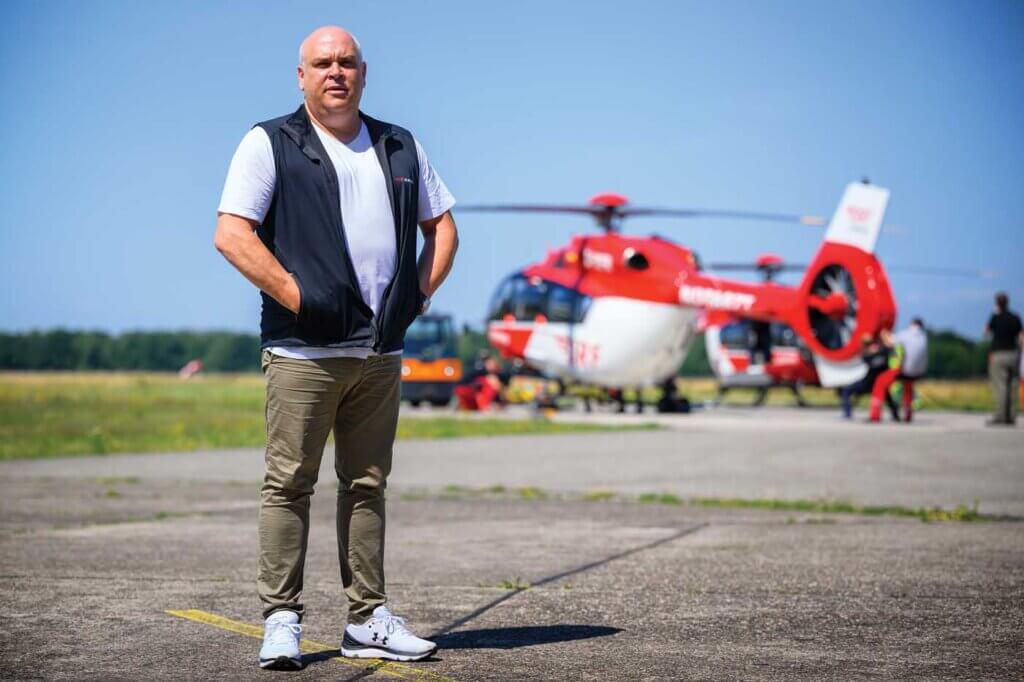
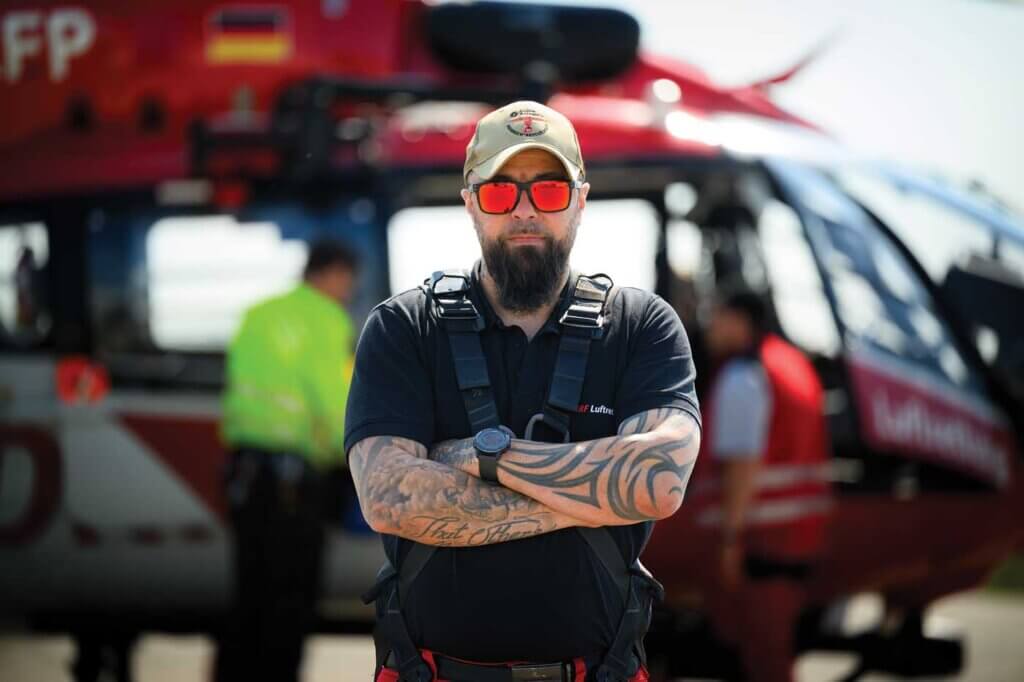
The human factor
While DRF Luftrettung adopts technology to seize opportunities and overcome operational challenges, some problems remain uniquely human in nature.
For decades, German air rescue drew pilots from a predictable source: military aviation. The Bundeswehr and police units supplied experienced aviators looking to transition into civilian careers. But like many militaries around the world, these organizations are now focused on retaining the talent they have invested in training — with predictable downstream effects.
“Most pilots used to come from the army,” Kapp explained. “But they realized that it doesn’t make sense to train people and then they go off somewhere else.”
While the military’s decision was both economically and organizationally rational, it created a conundrum for civilian emergency aviation. Private training is available, of course, but it takes years to build the kind of experience required of a HEMS pilot — and many of those skills must be specifically trained.
“Many people now do their training privately paid for,” Kapp said. “It is a big investment, [and] it can be challenging to recruit experienced pilots who are suited for the specific demands in air rescue.”
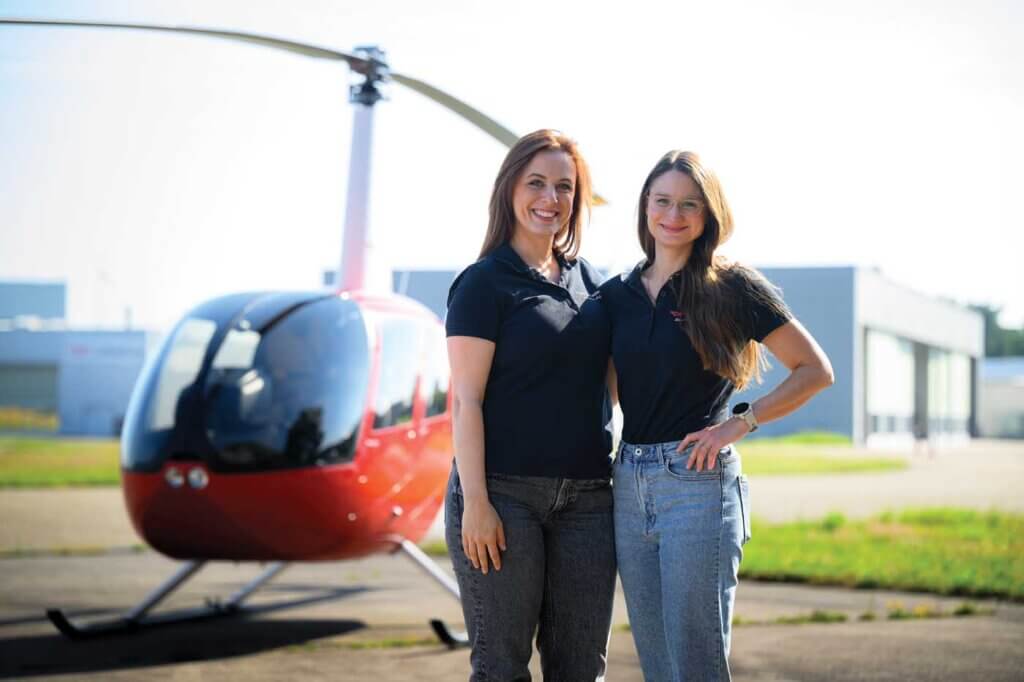
DRF Luftrettung’s response once again demonstrated its willingness to adapt, making a significant short-term investment to mitigate a long-term challenge.
“Three years ago, we started our own training program, so you can now become a commercial helicopter pilot with ATPL theory with DRF Luftrettung,” Kapp explained. “Being a pilot in an air rescue organization is still the dream for many people.”
But just as hope is not a plan, dreams alone are not enough to put even the best plans into practice. Standing up an in-house pilot training pipeline is no small undertaking, even for an organization of DRF Luftrettung’s size, with lead times measured in years, not months.
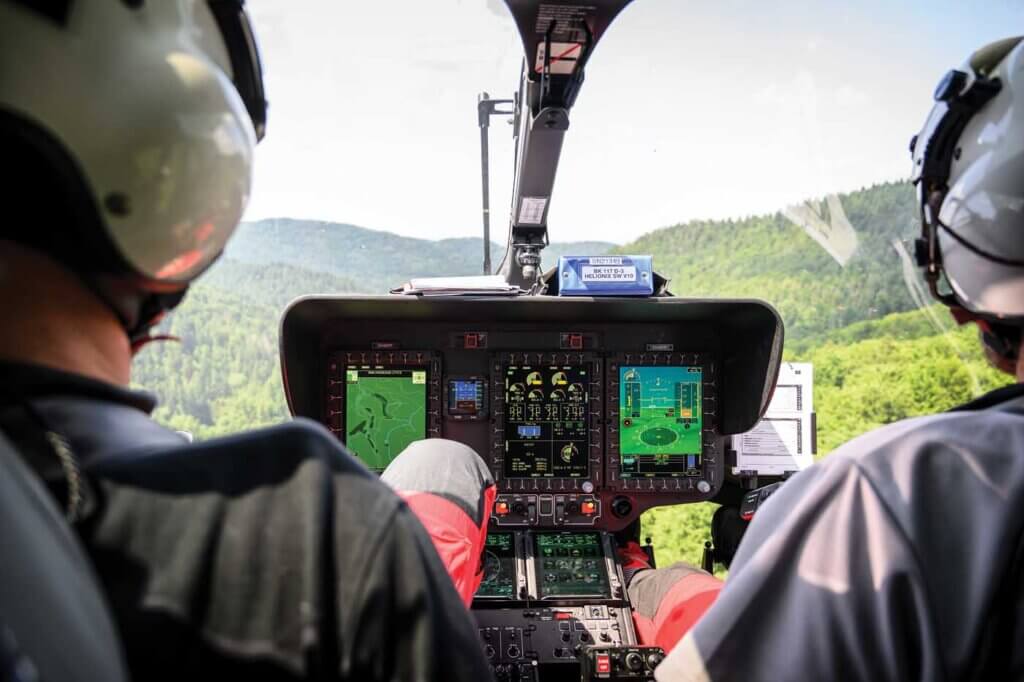
The academy offers self-funding students an end-to-end commercial pilot course, which alternates between theoretical and practical phases, held at the DRF Luftrettung Academy in Bühl and at the organization’s operations center at Karlsruhe/Baden-Baden Airport.
In addition to instruction from experienced DRF Luftrettung flight instructors, students also gain practical insights into the wider world of air rescue, including seminars with the organization’s technical and medical departments.
While the goal is to create a pipeline for DRF Luftrettung, the academy guarantees neither recruitment for the candidates nor future pilots for the organization.
“The first group finished last year,” Kapp said. “We were glad to be able to offer four of them positions as copilots, and another four from the second training class have been hired recently.”
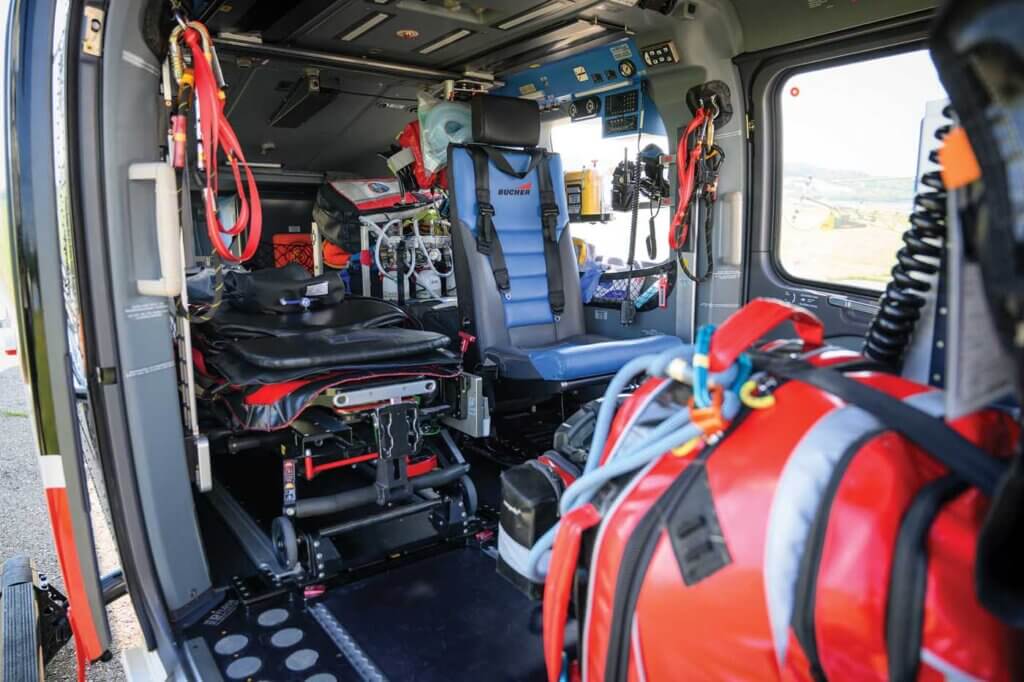
And it’s not only the pilots who benefit. DRF Luftrettung now tests medical equipment that would have seemed like science fiction when the organization was founded, transforming helicopters from transport platforms into mobile emergency rooms.
“We are testing protein markers in patients showing signs of stroke, to determine whether it’s a stroke or a hemorrhage — because obviously the treatment will be quite different,” Kapp explained. “And we have helicopters carrying blood products for immediate transfusion at accident scenes, without having to go and get them from somewhere else.”
While the concept of bringing hospital capabilities to the patient — rather than simply transporting patients to hospitals — is now emblematic of modern HEMS operations, each new innovation must integrate seamlessly with existing systems to be worthwhile. The result is a phenomenally effective lifesaving network, but one that also risks accumulating ever-increasing layers of complexity.
This challenge is most evident when different technologies converge. Kapp described a recent emergency drill where helicopters operated alongside drones.
“They had four drones and three helicopters, so that was really interesting to see how they organized that,” she said. “They had strictly separate air flying areas — helicopters on one side, drones on the other.”
While necessary for now, this segregation is operationally limiting and prevents the systems from being truly integrated. “Drones can be both sides of the spectrum,” Kapp observed. “They can present a supplementary tool during missions, but they also present a risk, so the point is really to see how this technology can be incorporated into the existing system.”
And although drones and other advanced air mobility systems are beginning to be evaluated and adopted across the HEMS industry, DRF Luftrettung’s commitment to 10 Airbus Helicopters H140s suggests that crewed platforms will remain indispensable for some time. As one of the launch customers for the new Airbus type, DRF Luftrettung is betting on operational flexibility as the key to future effectiveness.
At the same time, DRF Luftrettung is also looking ahead to new technologies. In cooperation with eRC-System, it is helping to develop electric vertical takeoff and landing (eVTOL) aircraft for patient transfers between hospitals, contributing its expertise in both flight operations and medical care. A prototype was unveiled in Taufkirchen, near Munich, in 2024.
This forward-looking approach complements the organization’s investment in its current fleet. DRF Luftrettung operates one of the largest H145 fleets in Germany and Europe. “We are continuously modernizing our fleet to meet the challenges of the future — with a view to hospital reform and emergency rescue reform,” Kapp said. “We use the H145 because it is very well suited for dual use — for both emergency missions and intensive care transports.”
The plan to purchase 10 new H140s will see them replace DRF Luftrettung’s H135s. Being the first to adopt a new type carries risks, but DRF Luftrettung has faced similar challenges before. “We were the first to introduce nighttime flights in Germany as a civilian [air rescue] organization,” Kapp said. “And that took a lot to achieve.”
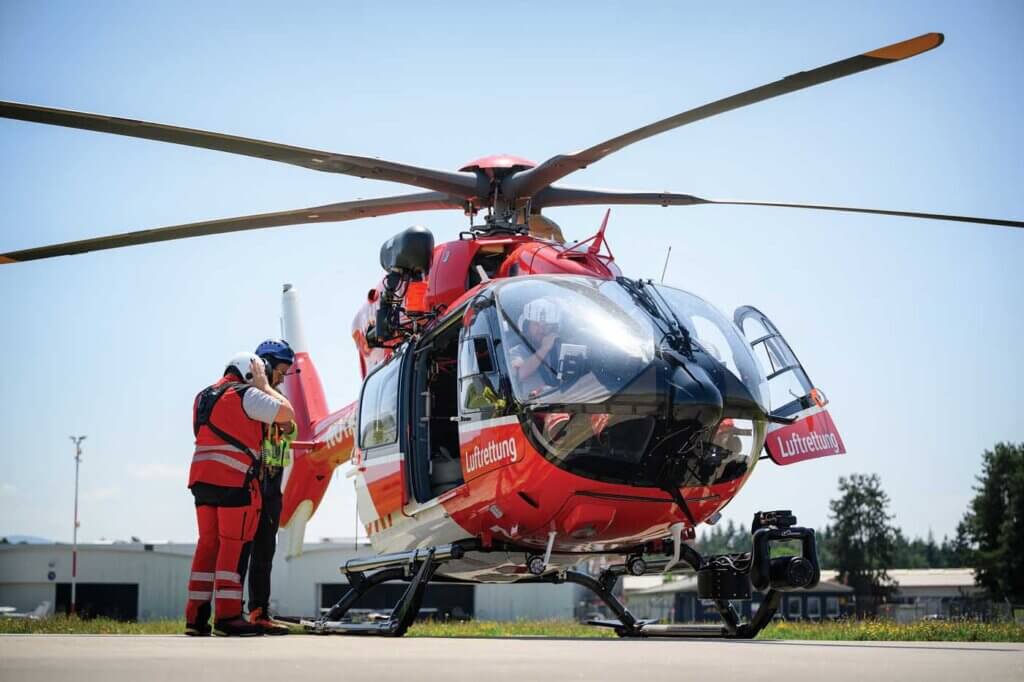
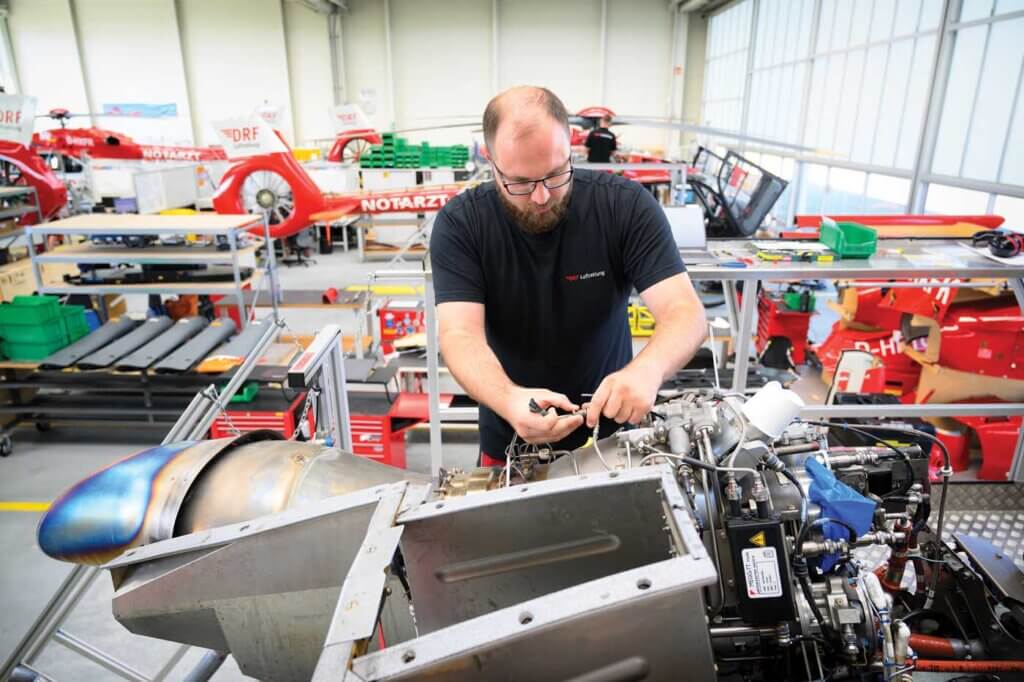
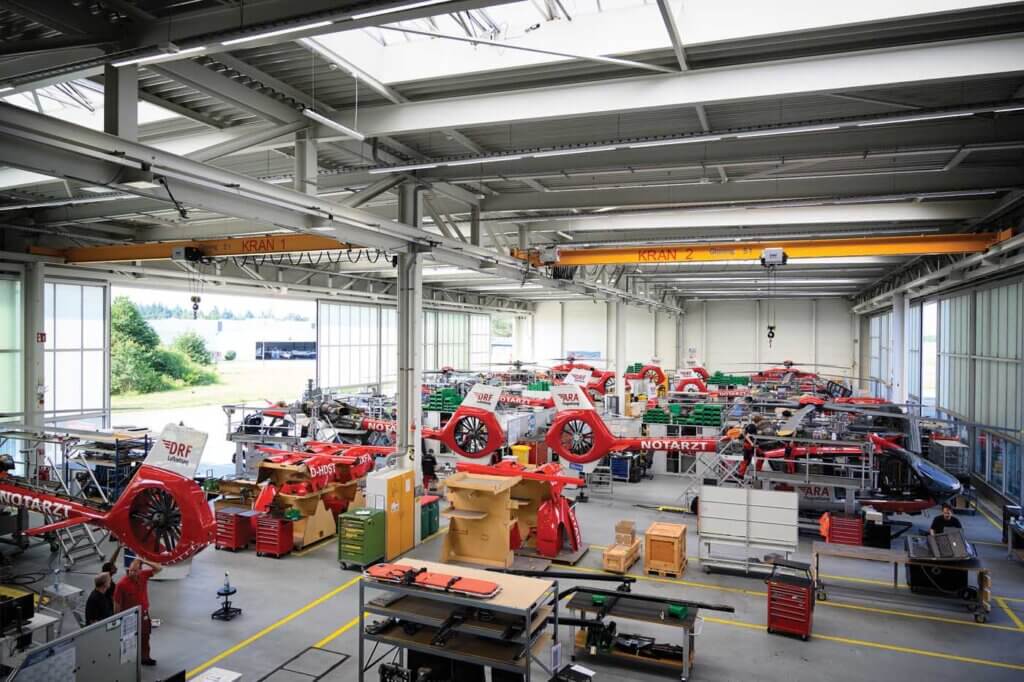
Of course, the new aircraft will also come with new maintenance requirements. With its own Continuous Airworthiness Management Organization and a maintenance facility staffed by around 180 technicians and space for more than a dozen aircraft, DRF Luftrettung’s investment in adopting a new type extends far beyond the cost of the helicopters themselves.
After 50 years of operation, the organization continues to face significant hurdles: a looming pilot shortage severe enough to warrant its own training academy, and the emergence of electric aircraft that may one day fly themselves to accident scenes — but are not yet sophisticated enough to earn the trust of those sharing the same airspace.
These challenges might have been unimaginable to DRF Luftrettung’s founders, but given what they accomplished, it seems unlikely they would have shied away from them.
“We’re 50 years old, but we’re still agile and we still want more — not in terms of market share, but in terms of what we can give our patients,” Kapp said.
That might sound straightforward, but balancing current operational demands with the need to prepare for an uncertain future is anything but. It requires not only a pragmatic approach to risk, but also the courage to embrace it — characteristics that seem embedded in DRF Luftrettung’s DNA.
A little over 50 years after its formation, the organization now operates from 31 bases across Germany and another four in Liechtenstein and Austria — 14 of them ready to respond around the clock.
Today, its crews employ technology and training that to the founders would have seemed nothing short of magical. Yet the story of DRF Luftrettung stands as proof that tragic beginnings need not dictate endings, that persistent dedication can overcome structural obstacles, and that the simple wish to help, sustained across generations, can transform a mission born of loss into one defined by hope.