




It’s 3 a.m., and you’re patrolling your district on a quiet Tuesday morning. The radio chirps and dispatch sends you and a backup officer for a violent domestic violence call where a husband was reportedly assaulting his wife. You arrive on scene, arrest the husband, interview those involved, and collect the necessary evidence. As you prepare to leave the scene, the wife approaches and thanks you for helping her. The sense of relief on her face is obvious. Her husband will go to jail, and she will finally rest easy. As you pull away from the scene, you realize it was a job well done. Your efforts are tangible, and you can see that you made a difference. Mission accomplished.
When the mission doesn’t feel finished
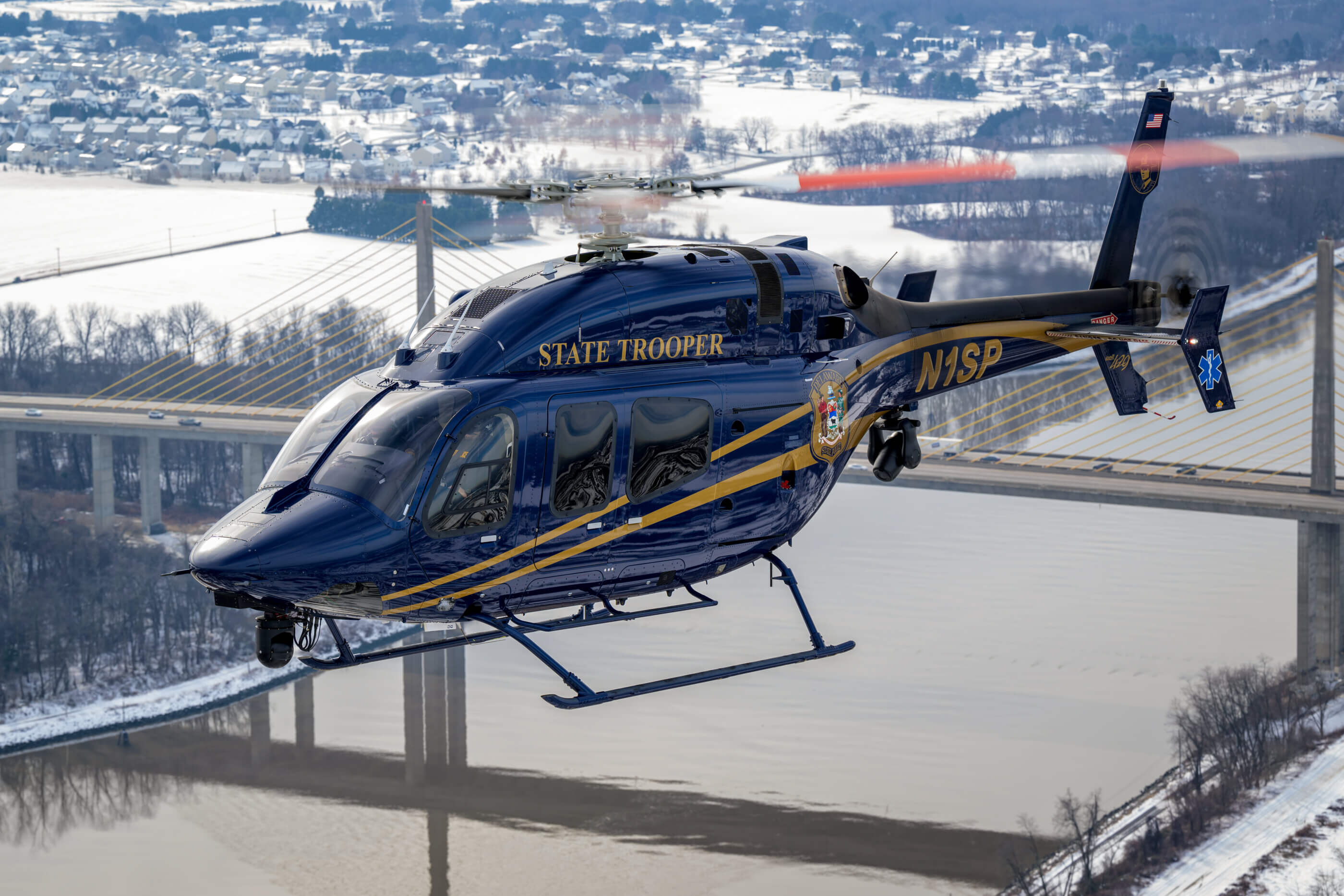
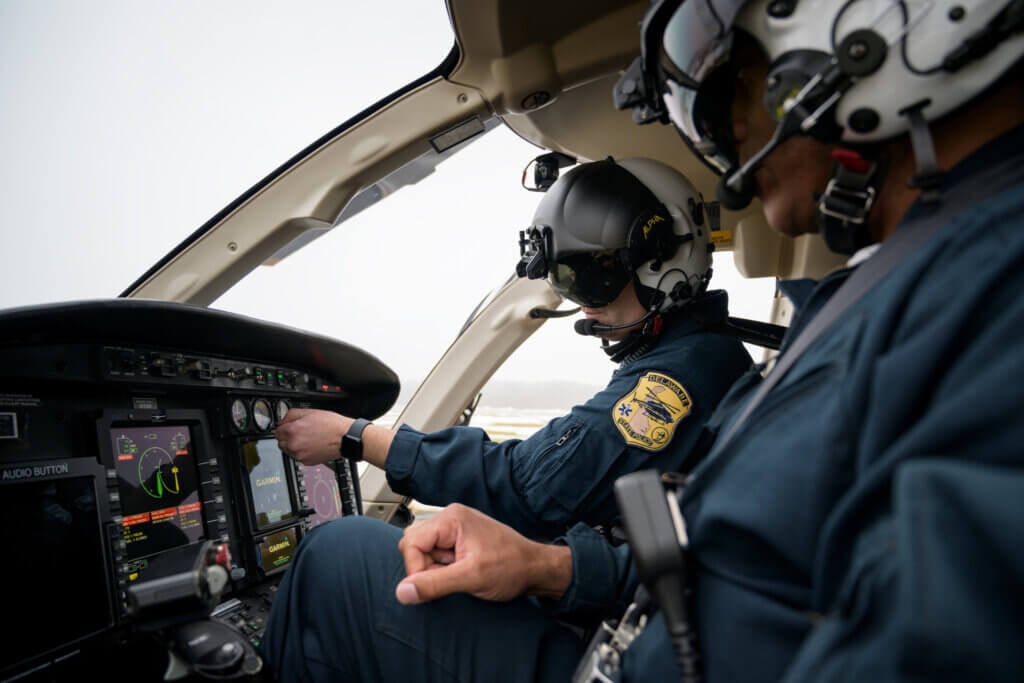
I have commanded the Delaware State Police Aviation Section for several years. Since accepting my post in 2022, I have started each workday the same way: by reading the daily mission logs from our flight crews. I quickly learned that we respond to all manner of calls for service, from medical transports and hoist missions to offering aerial support for officers on the ground. DSP Aviation has definitely earned the dubious title of “Masters of the Multi-Mission.” But as time passed, I found myself asking what mission accomplished really means in the world of public service aviation.
In the case of the domestic assault, mission accomplished meant the threat was removed, and the victim was safe. It has been my experience that this sense of success often eludes aviators and paramedics, primarily because of their proximity to the incident they are assisting with. Hovering 800 feet above an active scene in our Bell 429 offers the pilot and TFO a spectacular view, but it lacks a tangible connection to the incident below. This observation caused me to take a closer look at our medical mission, and the same question came up: What does mission accomplished really mean, specifically in the world of patient care?
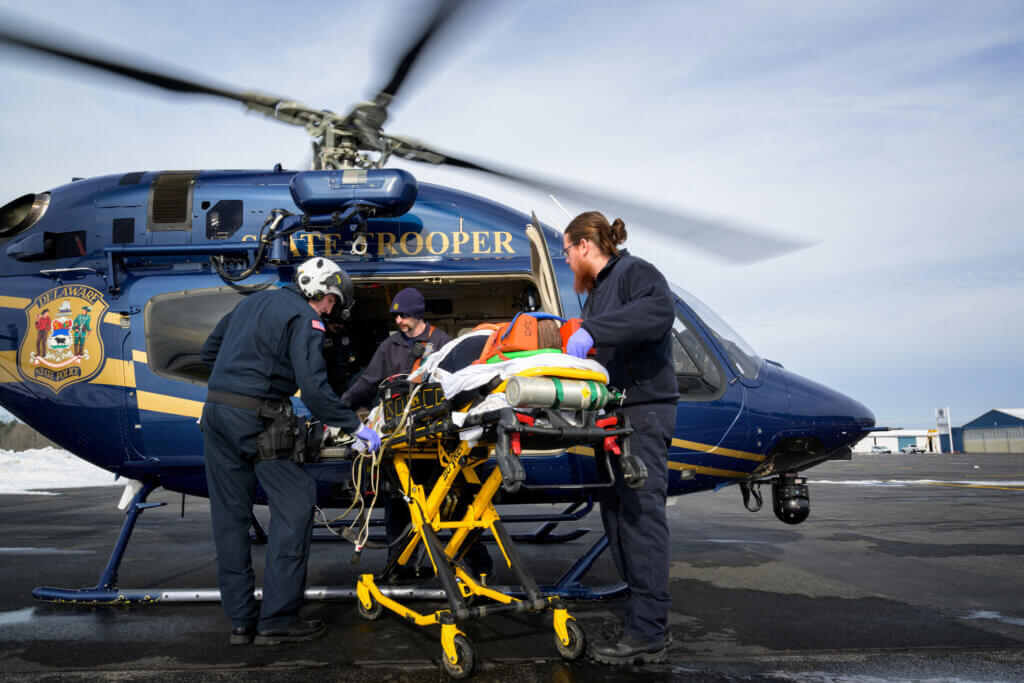
Our flight crews are auto-dispatched to priority one trauma calls, and we cover the entire state. We transport patients from crash scenes, industrial accidents, long falls, and after suffering strokes, to name just a few of the types of calls we receive. But when I read each mission’s narrative, they all ended the same way, with the patient being transported to a local trauma center and turned over to its medical staff. Mission accomplished? Certainly, but this left me pondering yet another question: How does this type of medical care ultimately impact one’s mental health?
The distance between rescue & recovery
The basic fact is that in these types of incidents, our flight crews only see patients at their very worst: mangled, bleeding, unresponsive, screaming, or riddled with fear. When the patient is turned over to hospital staff, that is their lasting image. The crew never sees the patient’s recovery.
Mission accomplished? One would be hard-pressed to engage in this line of work and not feel a sense of “maybe.” Maybe the patient will feel better. Maybe they will walk again. Maybe they will return home to their families. As the section commander, I didn’t think there might be a better approach to “mission accomplished”; I knew there was.
The goal became clear: find opportunities to connect our flight crews with the patients they cared for, but after the patients had recovered. The first time this happened under my tenure occurred organically in 2024 with a patient named Kayla Hominski. This became the inspiration for what we have affectionately named the Care and Connect Initiative. But more on Kayla’s story later.
I sat down with my section administration to better understand the problem as it relates to trauma exposure for police officers and paramedics. According to one FBI study, the average police officer experiences 178 to 800 traumatic events throughout their career. The number of baseline exposures skyrockets for paramedics, with EMS-1.com reporting they experience three to five traumatic events per month, or 800 to 900 instances in their career. This leads to an increased number of first responders suffering from post-traumatic stress disorder (PTSD).
The National Institutes of Health notes that police PTSD symptoms can include intrusive re-experiencing, severe avoidance, negative mood alterations, chronic hyperarousal, anger outbursts, hypervigilance, and emotional numbness. A 2025 New York Times article reported that law enforcement officers have an average suicide rate of approximately 21.4 per 100,000 and are more likely than the general civilian population to die by suicide. Ignoring this data makes us complicit in the problem, and we must do more to address mental health.
Care and Connect takes shape
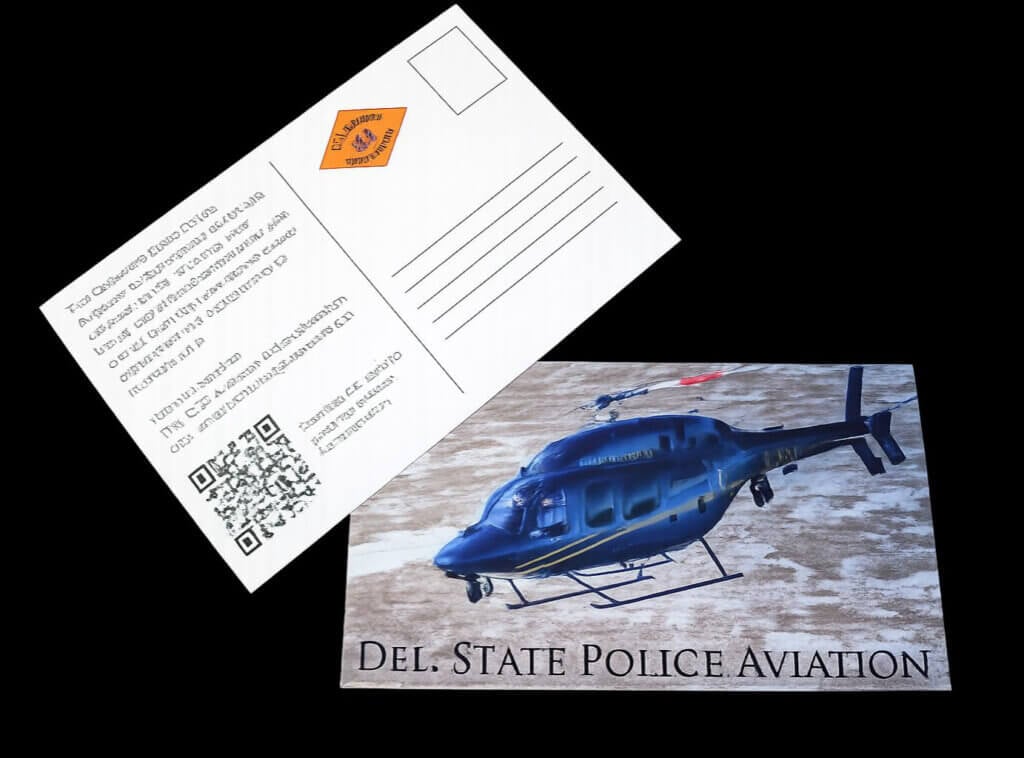
My leadership team theorized that if we could connect crew members with patients who were now recovered, we might just lessen the overall impact of the trauma exposure. We settled on an idea where we would mail postcards to the homes of the patients we flew, provide our email address, and ask them to share their experience. Careful consideration was given to protect patient privacy. The cards are sent to an address, not a specific person. The script on the back of the postcard reads, “The Delaware State Police Aviation Section cares about the citizens we fly. If you or your loved one recently interacted with one of our flight crews, we would appreciate the opportunity to hear about it.”
The first reply was received on May 5, 2025. I appreciated the email, but I struggled to find a way to make this person’s story meaningful to the crew. When I read the incident report, the call seemed routine. I felt it best to wait for another reply.
The reply that made it real
The next postcard reply was received on May 20, 2025. This time, it was from Julie White, the mother of a pediatric patient named Hudson. Hudson had sustained injuries from a long fall. In her email, she described how scared she was when she learned the helicopter was coming for her son and how neither she nor Hudson had ever flown in a helicopter or airplane.
“The two men on the helicopter that day, I will always remember!” she wrote. “They talked to me the entire time, making me feel comfortable and calm; the care they gave my boy was just heartwarming. I would love to personally tell them thank you from the bottom of my heart!”
Most importantly, she told us Hudson was back to his “silly normal self” later that day. She even sent pictures of Hudson to show us how he was doing. This was the connection I was looking for.
A mission comes full circle
All our flight crew members are parents themselves, so dealing with pediatric patients of any sort hits home. I jumped back into our AvLog system and learned the pilot who flew Hudson was Corporal Alex Kobetis, and the paramedic was Corporal Chris Donaldson. I was able to share Julie’s email and pictures of Hudson with them. Corporal Kobetis sent me a reply email that read, “Thank you, sir. I remember this patient, and I am happy to hear it was a positive experience for them both.” This truly brought things full circle.
A few days later, on May 28, 2025, Jerome Emerson sent an email on behalf of his wife, Angie. Angie suffered from a medical incident on Sept, 12, 2024. She was evaluated at the scene and flown from her home in central Delaware to Christiana Hospital, our Level I Trauma Center. Ground transport would have taken over an hour, but the rapid aerial transport took just 17 minutes.
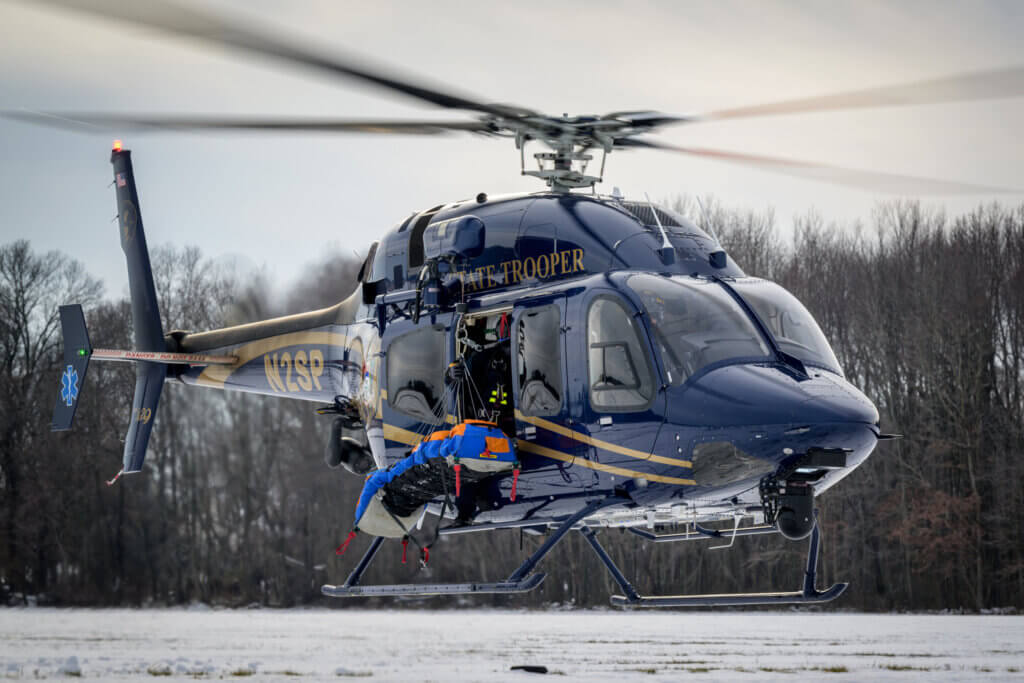
Jerome explained that Angie was impressed with the care she received. “Your trooper talked to her the whole way while checking vital signs, etc. Kept asking about her comfort primarily.” He concluded with a bit of humor: “As a side note, you all used our neighborhood green area. I’ve been telling neighbors ever since, ‘Make sure you tell real estate agents that homes in here come with a helo pad.’ ”
Efforts like this can’t just end with an email from the patient or the patient’s family. It is imperative to be consistent in the follow-through and ensure the flight crews learn of the patient’s outcome. The AvLog software revealed the aircraft was piloted that day by Corporal Antony Carter and paramedic/TFO Corporal Jason Walker. That afternoon, Corporal Walker happened to walk into my office when I was writing a reply to Mr. Emerson. I looked up and told Jason what my email was about. A slight grin emerged on his face, he nodded his head, and said, “That’s really cool.”
The story that started it all
Earlier, I mentioned how this initiative to connect patients with our flight crews started with Kayla Hominski. On July 15, 2023, Kayla was severely injured in a backyard fire pit incident where she sustained significant burns over 43% of her body. The incident occurred in Lewes, Delaware, and the nearest burn center was over 100 nautical miles north at the Crozer-Chester Burn Center just south of Philadelphia, Pennsylvania. The Delaware State Police Aviation Section was summoned, and Kayla was flown to the burn center, where she spent four weeks as an inpatient recovering from her injuries.
A year had passed since that incident when a different flight crew was conducting a public demonstration in southern Delaware in 2024. Kayla happened to be there, and she approached the crew, shared her story, and asked how she could connect with the pilot and paramedic who cared for her that day. As fate would have it, the Aviation Section was having a family picnic the following weekend. Kayla and her family were invited and agreed to come speak about her incident.
She was warmly greeted upon her arrival and soon took the microphone, shared her story, and thanked those who cared for her. With tears in her eyes, Kayla started to speak. “I felt like the last piece of my puzzle was complete, knowing who these people are that saved my life.”
I looked around the audience and caught a glimpse of the paramedic who cared for Kayla. I could see it in his eyes that hearing her story was meaningful for him, and there was a connection. He had a chance to not just see Kayla on her worst day, but when she was well.
Mission accomplished.